As of this writing, I am scheduled to be the cinematographer on a short film my friend is writing and directing. We will try to shoot the week before we both go back to school, but above all else, we are making a new film, something I can only describe as a joyous experience. And similar to how many filmmakers work, we try to agree on a set of references. In this case, specifically visual guides. And one of the films on the list my friend compiled was Ingmar Bergman’s penultimate theatrical feature film Autumn Sonata (Höstsonaten) from 1978. Since I am serving as cinematographer on this short my friend is working on, I felt an obligation to see the films referenced as both visual and thematic inspirations. And I was more than happy to revisit Autumn Sonata, a film I had only seen once before but had remembered as an intensely powerful experience that left me speechless. But even as I paused it frequently throughout to take notes on the lighting, use of colors and choice of angles, I remained just as involved in the story as I had been the first time around.
Autumn Sonata was the first collaboration between Ingmar and Ingrid Bergman (no relation), two icons of Swedish cinema. They had reportedly discussed the idea of working together for a few years before they embarked on the making of the film. When they finally managed to get together to collaborate, Ingrid had just received the Academy Award for her performance in Sidney Lumet’s 1974 adaptation of the Agatha Christie classic Murder on the Orient Express. Meanwhile, Ingmar had enjoyed an otherwise fruitful first part of the decade with successes such as Cries and Whispers and Scenes from a Marriage, but had experienced struggles with the tax authorities, which culminated in a very public arrest at the Royal Dramatic Theater in 1976. As you can imagine, Ingmar did not take this well.
He took it so poorly that he embarked on a self-imposed exile from Sweden, working out of West Germany and Norway, where he made one of his worst reviewed films The Serpent’s Egg with none other than David Carradine of all people. Following this, Ingmar remembered a note he had received from Ingrid that asked the question “when are we going to make a film together?” It was roughly at this point where Ingmar pulled out a script he had written about a father and a son and simply switched the genders to turn it into a mother-daughter story. Ingrid would play the mother Charlotte, a world-renowned pianist who visits her daughter Eva, played by Ingmar’s former lover and frequent collaborator Liv Ullmann. The initially pleasant evening takes a turn for the worse as true emotions and years of resentment boil to the surface in an emotionally charged confrontation and climax.
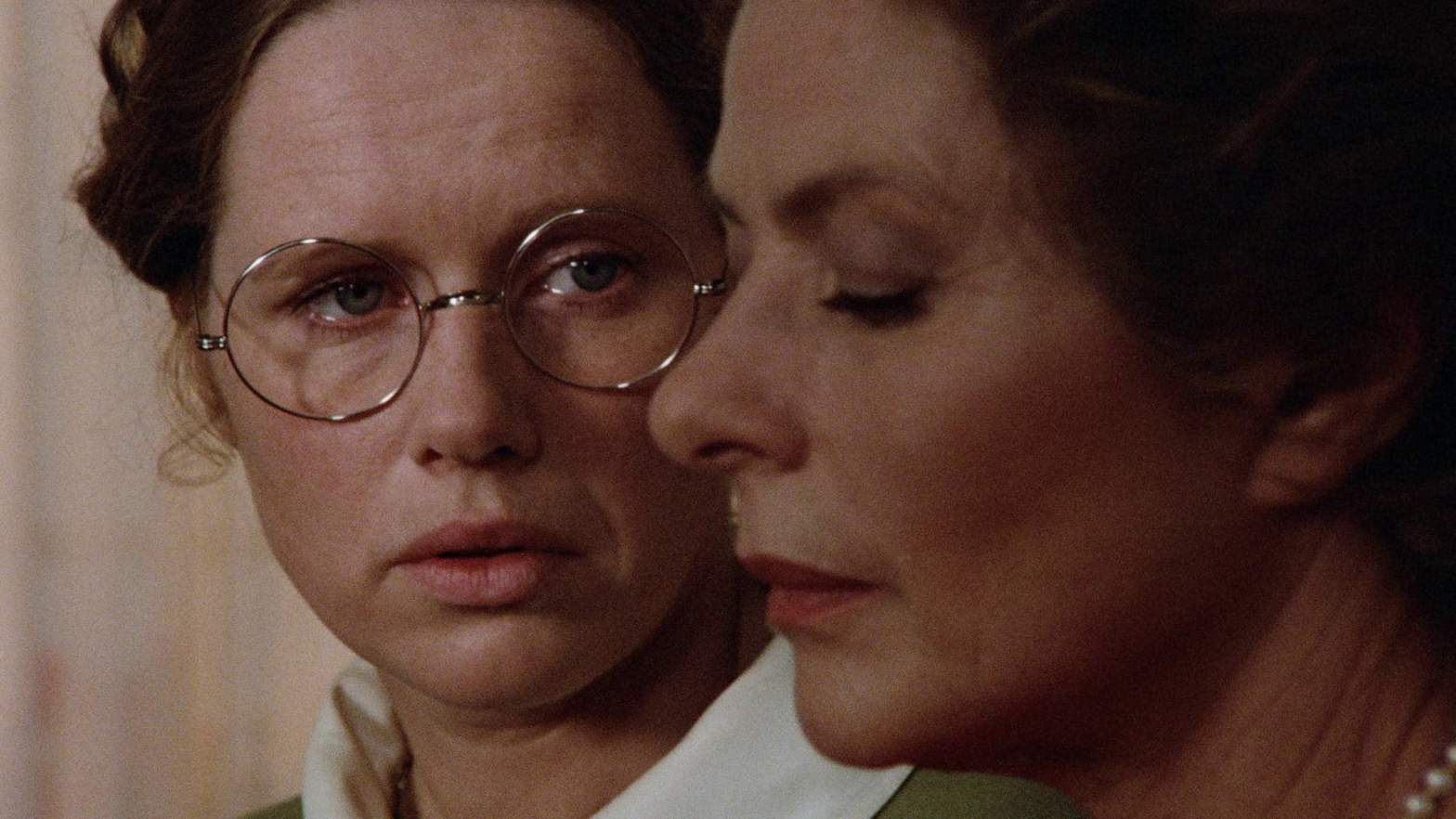
Normally I don’t like to take notes during films because it is too distracting to write while watching. I usually prefer to just experience a film and absorb it. In this case however, I was revisiting a film I have already seen once and I was trying to carefully observe the cinematography of Sven Nykvist to see what he did with the film. As usual, his work is extraordinary, but I noticed things about it that I had never considered before this viewing. One such element was that the camera only moves when a character moves on screen, and only through a pan, tilt or zoom. There are exceptions of course, and when they break this visual style they do it on purpose. The one instance that comes to mind is when Ingrid plays Chopin on the piano. The scene is shot from above and starts on a closeup of Ingrid’s hands and quickly pans and tilts to a tight closeup, still viewed from above. But I think it is important as a cinematographer not to simply get distracted by the technique of it and simply ask “how” but crucially “why.” Why does the camera move this way at this moment?
At this point in the story, Charlotte’s daughter Eva has played the Chopin piece in an attempt to seek acknowledgement and approval from her domineering and neglectful mother. But when Charlotte starts criticizing Eva’s playing and subsequently plays in her own unique style she takes full command of the scene and over Eva. A shot from above is usually thought of as a symbol of powerlessness but I think its use here in some strange way symbolizes the opposite, Charlotte’s ultimate power. This image then brilliantly cuts to one of Ingmar’s most painful closeups, with Ingrid on the right side of frame, closer to the lens and out of focus, as we focus on Liv’s silent reaction on the right side of frame. It is a heartbreaking shot that speaks volumes to the decades of wounds and damages Eva has had to endure at the hand of her mother. I might go so far as to proclaim it Ingmar’s best closeup, which is saying something. And from a photographic standpoint, the use of camera angles, specific lenses and the connection between shots create a beautiful flow. This I think would be rather good homework for anyone interested in the art of cinematography.
I realize this column has focused primarily on the film’s cinematography and not so much on the strong performances of Ullmann or Ingrid. But since the performances and the writing of the film tend to be the parts most discussed amongst cinephiles and critics, I feel justified in diverting attention towards the film’s subtle yet remarkable cinematography, which shouldn’t be a surprise given it was shot by one of the greatest cinematographers of all time, Sven Nykvist. Autumn Sonata: a film of quiet power, tremendous pain, and fantastic technique.
 A Fistful of Film