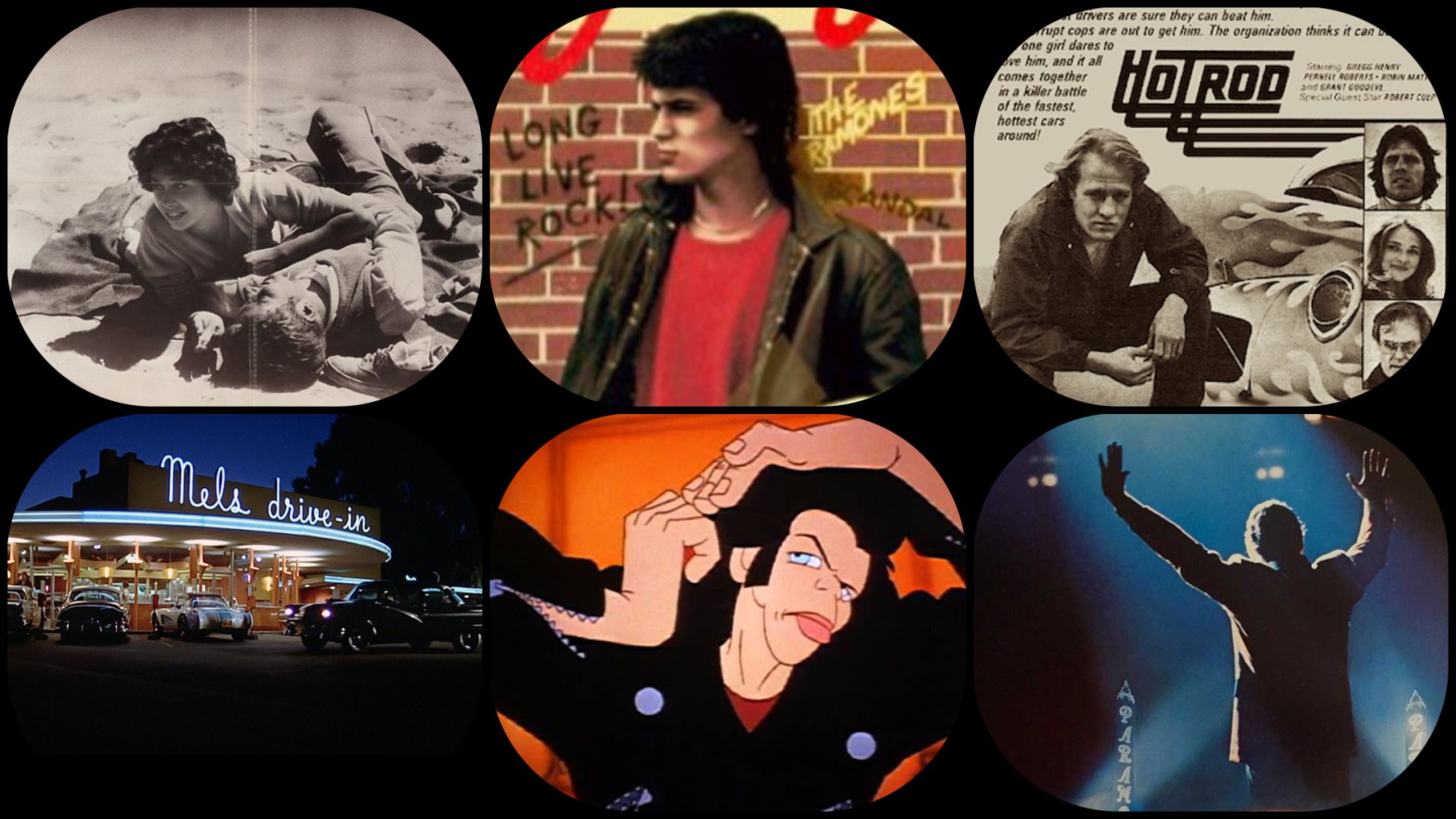
I use to lay the rock-n-roll love on pretty thick in the early days, as seen in articles like “Dig This Mack!” but that all came from a genuine love of the time. A love of a world now bygone and inaccessible. All we have left are those who can still cast their minds back to those fabled “good old days,” the menagerie of hits on wax, faded Polaroids, and withering film reels. I think it’s time we have a gander at some of the films that do the same. They step back and look to that era of youth with a different set of eyes, through a different lens. I would’ve done this as a Double Bill Delights, but we got a few too many choice picks to be stingy about, so let’s roll on, cats.
American Graffiti (1973)
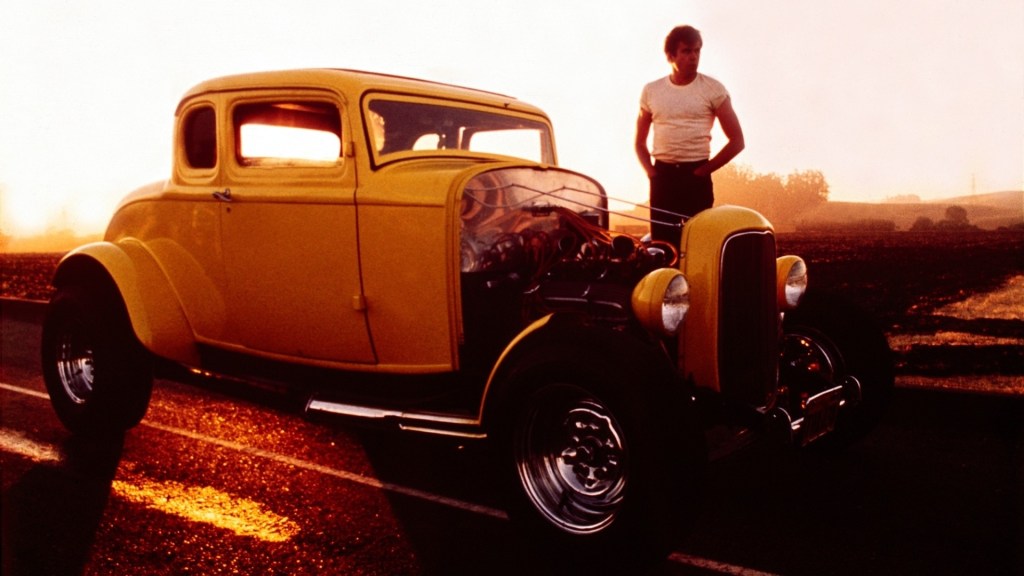
We’ll get the obvious choice out of the way, but from the moment you see the halcyon neon glow of “Mel’s Drive-In,” and a parking lot packed with enough classic hot rods to qualify for a modern cruise-in, you cannot help but be captivated by George Lucas’ love-letter to his childhood and teen years in Modesto that is American Graffiti.
An ensemble cast led by a relatable Richard Dreyfuss, you get that last-of-the-summer-wine sensation all teens feel when they leave high school and past the final page in that chapter is this thing called “the real world” adults always brow-beat them with. Only this time, those emotions, those little moments in time are all set against a gorgeous nocturnal backdrop, packed to the brim with amazing cars and amazing music in a five-alarm case of California Dreaming. The vignette structure is never a hinderance as the pivots between stories are done at just the right moment, flowing in and out of one another with great ease. And when every frame’s a goddamn postcard in this nostalgic look back on the early 60s, you can’t go wrong no matter where the film takes you.
To keep it short and sweet: American Graffiti is a hangout movie whose leisurely pace, tone, characters, style, and soundtrack make it beyond a worthwhile watch. A staple of mid-century American film that, if it wasn’t for a certain galaxy far, far away, would be the finest diamond in the crown of George Lucas’ celluloid empire.
September 30, 1955 (1977)
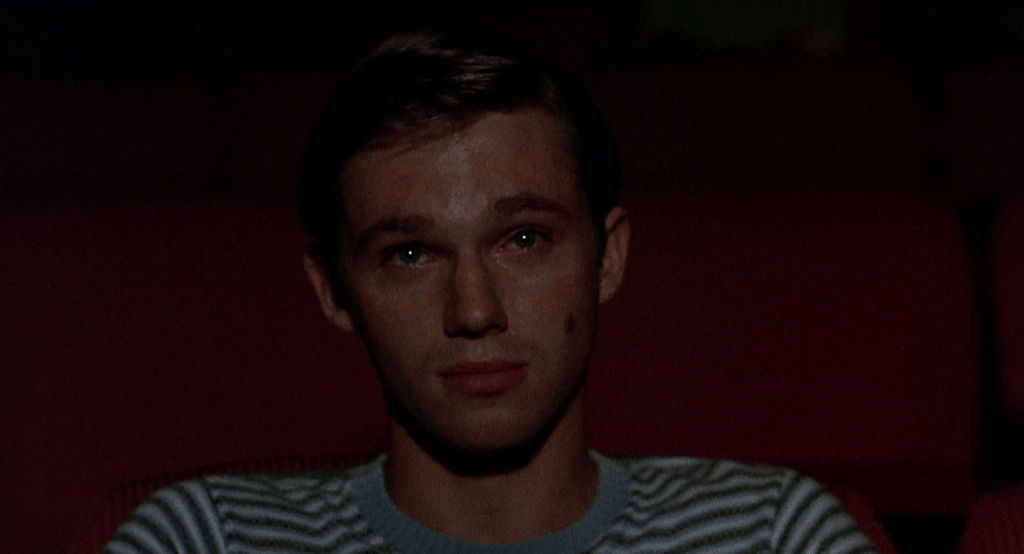
Where were you the day the Rebel died, on that late September eve? Somewhere across the country, there was a young man sat in a theater, watching this bastion of American youth search for his identity on the Silver Screen, and by extension, looking for his own. So opens September 30, 1955, directed by James Bridges of The China Syndrome and The Paper Chase fame.
The X factor in this production is leading man Richard Thomas, then known to the American public as “John-Boy” Walton in the beloved Depression-era television drama The Waltons. Thomas had made his exit from the series earlier in the year and would emerge a revelation in this astounding film as a college student shocked by the sudden death of his hero, James Dean, a part played to perfection. Simply put, September 30, 1955 and Frank Perry’s 1969 drama Last Summer have cemented Richard Thomas as a remarkably gifted talent in my books. His manifestations of the turmoil of youth are some of the most captivating in the medium’s history, and the depiction of a young man unravelling into a renegade makes the film tick like a timebomb.
The rest of the cast does an exceptional job, especially Susan Tyrell as the mother of Thomas’ fellow Dean obsessive, Billie Jean (insert witty MJ joke here). Bonus points for showcasing a cast including Dennis Christopher and Dennis Quaid a year before a tale of similar small-town antics, Breaking Away.
Supporting the fine cast are the exceptional production values. The score by veteran composer and friend of Dean’s, Leonard Rosenman, imbues the film with a heartbreaking authenticity, weaving tender renditions of his themes for Dean’s first two films, East of Eden and Rebel Without a Cause, alongside peppier rhythms and his trademark dissonant chords. Gordon Willis’ masterful cinematography and Bridges’ sure-handed direction ensure that the 100 minutes devoted to this peculiar slice of Americana life turned upside down hits more than it misses.
But above all, Thomas makes the film; from the moment his eyes water at the end of East of Eden to his ride off into the distance, away from the town he rocked in the hours after the crash had made its way across the country. If one can forgive some of its more melodramatic passages, 9/30/55 is a fascinating glimpse into one of the many ways the death of an idol can rock his followers. A tremendous drama.
Hey Good Lookin’ (1982)
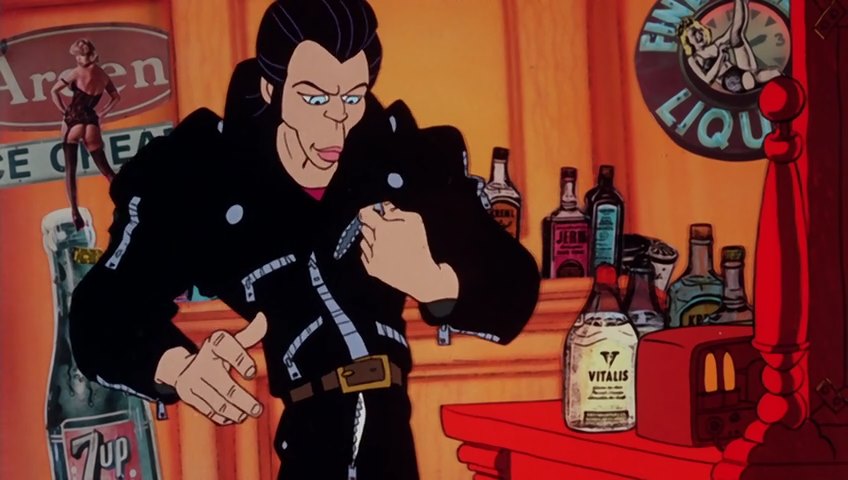
Ralph Bakshi remains one of animation’s most fearsome forces. Whether in the realms of dark fantasy or brazen satirical comedy, the Haifa-born-Brooklyn-raised creative would push the boundaries of what was acceptable to do in commercial animation, though he didn’t come out unscathed. And perhaps, maybe even more so than the war over 1992’s Cool World, the true testament to this eternal battle between man and industry was the nine-year journey endured by his hard-rocking 50s salute to home-turf Brooklyn, Hey Good Lookin’.
Hey Good Lookin’ does for the 50s what Fritz the Cat does for the 60s; an irreverent lampooning the decade in question. The story, told in classic Bakshi style and bravado, centers on Italian-American gang leader Vinnie Genzianna, deranged best friend “Crazy” Shapiro, and girlfriend Rozzie, played by Richard Romanus, David Proval, and Jesse Welles respectively, with the men having made a name for themselves in Martin Scorsese’s 1973 classic Mean Streets. The whole piece satirizes the juvenile delinquents and New York City gangs of the Eisenhower-era with the director’s trademark incendiary wit and a caricature art style ripped right off the sheets of a street artist in the Big Apple. It flows in the way all of Bakshi’s vignette-centric efforts do, but it is perhaps the fact he had to basically overhaul the picture that aided in this respect.
To get the elephant out of the room, Hey Good Lookin’ was set to be one of Bakshi’s biggest projects yet, one he was queuing up during post-production of his Molotov cocktail of a classic Coonskin. He wanted to do a live-action/animation hybrid, as well as return to the autobiographical quality of Heavy Traffic by way of his youth in Brooklyn, with Vinnie and Crazy both based on high-school friends of his. Warner Bros., initially excited about the project, gave it the greenlight and a cut was completed in 1975…just in time for WB to get cold feet as the storm cloud over Coonskin lingered. The studio delayed the films release until finally forcing the director’s hand and telling him to scrub the live-action and make it a completely animated piece in a play for “marketability.” Thus we got the film we got.
Fortunately, it’s a damn good one at that. Performed by a strong cast, and backed by a strange soundtrack that blends 80s Hall-and-Oates style with old-time rock-n-roll, the film stands as a killer nostalgia trip good for some midnight viewing.
And for those curious about what could have been…
A Warner Bros. product reel recently emerged that highlights some of the original live-action footage when the film was set to release in the mid-70s, and is a hell of an eyeopener.
Hot Rod (1979)
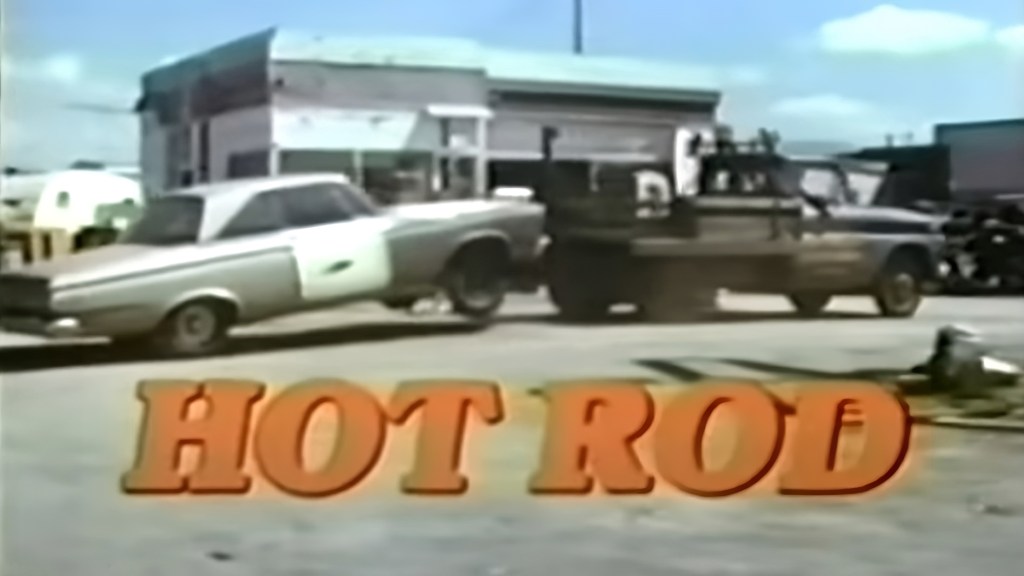
Now here’s a film I not only dig, but respect. Filmed on a Roger Corman schedule of 15 days, with footage shot on-location at the Fremont racetrack, George Armitage’s Hot Rod is a definitive nostalgia trip on the small screen. Set in 1979, the film follows a drag racer who blows into town and sets his sights on winning a national drag championship run by a root beer magnate, and rigged in favor of his son. Gregg Henry of future Body Double fame, Bonanza star Pernell Roberts, and TV veteran Robert Culp star in this quiet, compelling, yet thoroughly entertaining slice of gearhead life.
The film feels designed to be an echo the late 1950s and 1960s, as much as it overtly references it through the animated performance of Royce D. Applegate as radio DJ “Johnny Hurricane.” Michael Simpson’s original score consists of jazz solos on a saxophone, the soundtrack is loaded with classic rock-n-roll tunes, ending on the R&B classic “Dancing in the Streets,” and Gregg Henry dressed in his Rebel Without a Cause best. Culp plays the “villain” of the piece, T.L. Munn, to greaseball perfection, but Roberts always feels like a non-entity in the film, whose inhibiting of Henry in his quest of kicking ass on the quarter-mile feels at best a mild nuisance with next-to-no impact.
Gearheads will dig the Fremont and street races, the amount of mechanic action on display, and the charm of Henry’s scrappy, yet powerful Willys Americar, the gray lady having found herself a small cult following among hot rodders. All in all, not bad for a televised affair. If you don’t mind how utterly insane and somewhat insipid the plot becomes on account on how hellbent our soft drink tycoon is on destroying Henry, I think you’ll find this one a fun, 97-minute blast from the past.
Joey (1986)
Joey is a quiet, forgotten gem from a man who directed one of the more notorious video nasties. Joseph Ellison of Don’t Go Into the House fame dishes up a loving ode to the doo-wop side of old-time rock-n-roll, spinning us a yarn about the son of a washed-up lead singer who tries to get his band into a nostalgia show at Radio City Music Hall. It’s the type of nostalgia picture where said nostalgia is pushed to the background in favor of the drama of the story. And while the script isn’t winning any awards, it still is an engaging story, performed by a more-than-competent cast, and backed up with production design touches like most of the cars being classics, and getting real rock-n-roll artists like Screamin’ Jay Hawkins, The Teenagers, and The Silhouettes to appear as themselves. It all feels like a 50s teen flick updated to a modern yet retro setting.
In her review of the film for the The New York Times, critic Janet Maslin described Ellison’s style as “plain and perfunctory,” an assessment I consider half-right in that the film is remarkably unassuming. Neill Barry does a fine job in the title role, while his father (played by James Quinn) has a diet-John Ritter quality about him that is a bit more amusing than his own performance as the drunken dad jealous of his son’s musical gifts. The rest of the production doesn’t glam up the 50s image or play like MTV; Ellison commits to it being a drama rather than a music video or an overdone nostalgia extravaganza. However, I don’t consider any of that to be perfunctory. There is a great organic love of the doo-wop sound here, reflected not only by the guest stars but by Joey’s devotion to his music, contrasted by his father’s own insecurities about his talents.
In the end, Joey is a quietly compelling drama that showcases the surprising versatility of director Ellison, who clearly has a love for the material as much as your humble reviewer does. If you dig real music and are willing to give this little indie flick a second chance, it is recommended without reservation.
American Hot Wax (1978)
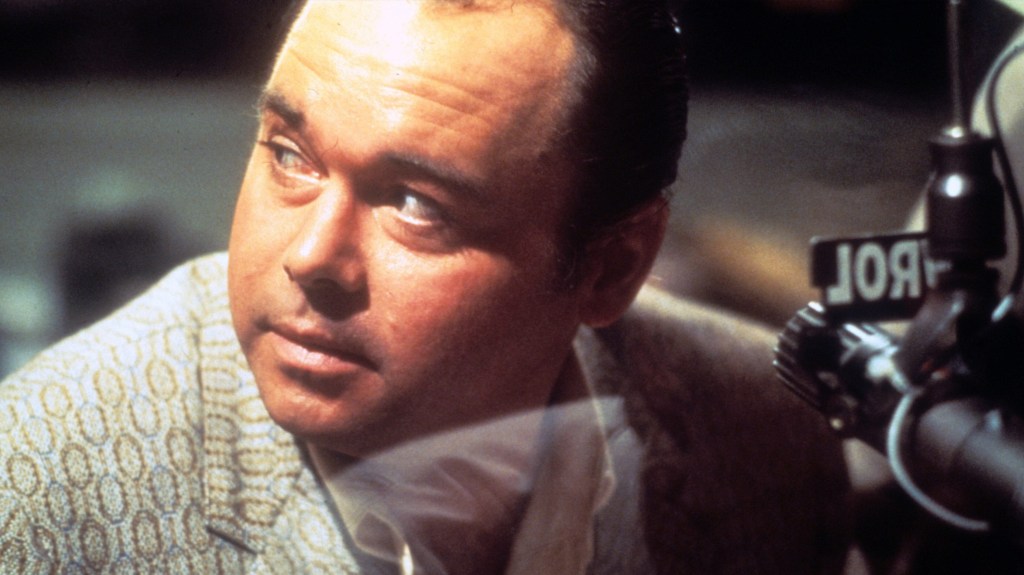
If we as a society crowned Elvis Presley and Chuck Berry the Kings of Rock-n-Roll, then it shall remain an immutable fact that the High Priest of the Big Beat was one Mr. Alan Freed. A radio disk jockey who brought unvarnished blues & rhythm records to the masses and forever changed the face of popular music in doing so. He was a man of the people, of the youth, and arguably one of the greatest forces in uniting all people through that most universal language: music. And if there is one thing that American Hot Wax got right to a T, it was that.
A fictional recounting of Freed’s final days during the golden years before the infamous payola scandal, Floyd Mutrux’s latter-day nostalgia picture recounts the hectic nature of Freed’s life at the time, and his imitable bond with the musicians he spun and the youth he spun them for. It certainly isn’t the most in-depth, it isn’t a “life story” biopic, and while storylines are resolved, there isn’t much to them to begin with. The kind of airy, typical rock-n-roll problems the old AIP and Columbia rocksploitation films revolved around. Kids digging and making music, grownups not understanding, all that jazz and slightly more. But above all else, there is a magic captured here that really keeps you watching, thanks to the infectious soundtrack and attention to period detail.
Many critics at the time likened the film to the rock B-pictures Freed had starred in back in the late 50s, and while it was point against the film for them, it’s a point in favor of it for me. While Tim McIntire may not quite have the look or voice of Freed, he has the spirit, and it is a spirit that resonates across the whole picture. The rest of the cast works out fine in their appointed roles, although you should brace yourselves for seeing a shockingly young (and admittedly obnoxious) Jay Leno, and a slightly less-so Fran Drescher. Add in a supporting cast of legendary artists like Screamin’ Jay Hawkins, Chuck Berry, and a literally show-stopping performance by Jerry Lee Lewis, and you’ve got yourself a rocking little number about the genre’s early years that rock all of us Moondoggers back to a time when the Big Beat was scaring the living shit out of all those squares.
Conclusion
Nostalgia strikes in strange ways. Sometimes all it takes is an old jacket worn the right way, a certain kind of car pulling into frame. Maybe it’s in the soundtrack, or maybe it’s all there on the screen. Sometimes it’s in the way one talks, or the way one carries themselves. In their own way, these films are another living record of that heyday in Americana history. Not the world of old-time rock-n-roll as it was, or as it was sold, but the way it felt to those who experienced it. The sensations, the atmospheres, that ephemeral, ineffable thing that strikes you as you remember. And if there’s anything left to be said, it is simply that these films together are one hell of a time machine trip you really can’t beat.
 A Fistful of Film