In this column, cult columnist Saoirse takes you on a biweekly jaunt through the obscure annals of the cult film world. We’ll touch on everything from Giallo to J-Horror to Wakaliwood & so much more. If it’s a low budget genre film, or even a big-budget flop with a dogged audience, or even an undiscovered gem, it belongs here.
Today we take a look a strange and etheral fairytale, Panna a Netvor, from 70s era Czechoslovakia.
Only three films have ever won what most people think of as the ‘Big Five’ academy awards at the Oscars. These films are; It Happened One Night, The Silence of the Lambs, and One Flew Over The Cuckoo’s Nest. These are all considered quintessentially American films, but one of these films was directed by Miloš Forman who finds his roots in a radical and subversive countercultural movement born in Czechoslovakia, then in the 60s under Communist control. This is the Czechoslovak New Wave, and one of its hidden gems is the focus of today’s piece.
Beauty and the Beast itself, while not an American story, is one that has been claimed by American storytellers. Originating as a French fairytale in the mid 18th century, it has been adapted many, many times, most famously by Disney in 1991 to much acclaim, although this is not even the first American adaptation of the story. Previously, the definitive version came from the tale’s home country in the form of Jean Cocteau, the great surrealist poet of French cinema, and his film La Belle et la Bête. Today even, to younger generations the definitive version, at least it was to my contemporaries when I was at film school, is probably the Dan Stevens live action version which tells the tale in much the same way as the animated classic. We have been drowning in American versions of this story. There is something about the simplicity of the idea that in the heart of a beast lies a prince that lends itself well to the flat and two dimensional storytelling of American studios, not inherently a criticism, but there remains a constant blockbusterfication of the story, a flattening of it into something manageable and digestible that can make it feel a bit, well, hollow.
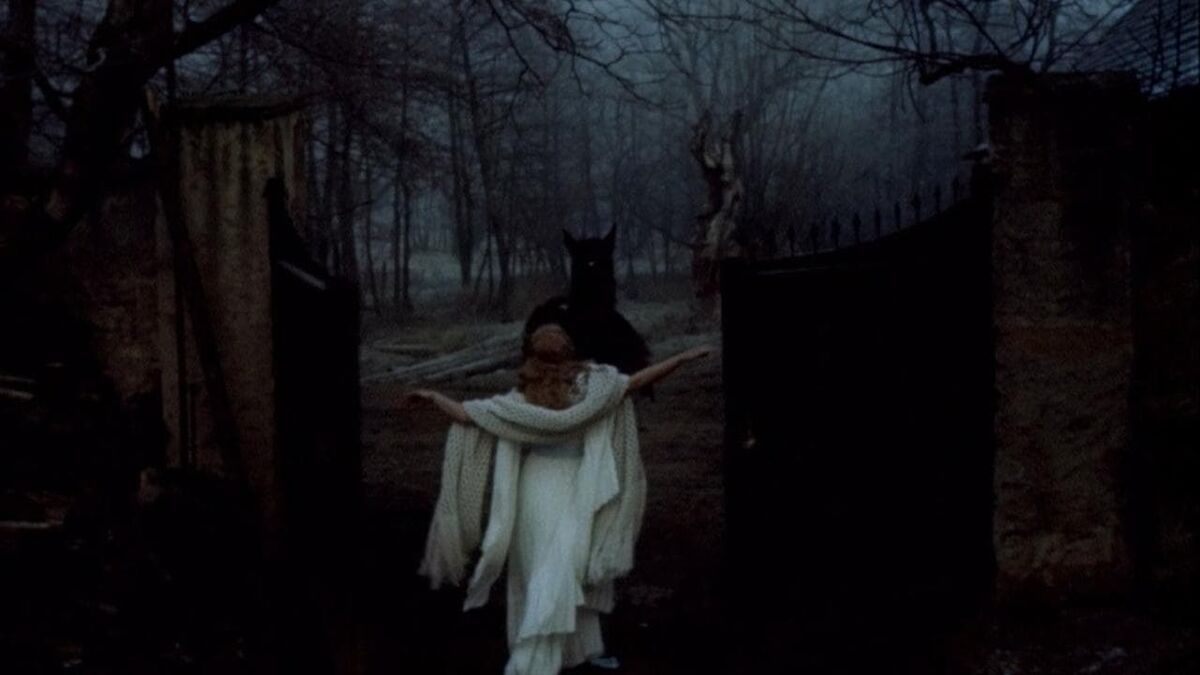
For Cocteau, the mere telling of this story was the substance, it opens with a title card emploring the viewer to open their hearts and minds, to regress back to when they were kids and wonder was still in the world, to believe all the fantastical things he has to show you, not because he has employed cinematic techniques to conjure your willing suspension of disbelief, but because the point of making the film is asking the audience to take a step over that boundary themselves, and the audience actively making the conscious choice to go with Cocteau. By contrast some of the American adaptations, especially the live action one from 2017, seem to expect you to already be slightly immature and, to be blunt, stupid, in the way you are asked to process the story. The hyper literalisation of that film makes you think that the problems you might have with the story do not exist on the level of choosing to open yourself to the fairytale, but on the unreality of the scene, an aspect which is somewhat the whole point of fairytale storytelling, and by extension the whole of cinema. The version we’re talking about today is, in my opinion, the one that is truest to Cocteau’s vision for the story, with all of the darkness of the world, and with all of the sentimentality and joy that fully indulging in this story calls for. If the 2017 version feels slightly ashamed to be telling a fairytale, this version is shameless while still being dark and grown up. Today we’re talking about 1978’s Panna a netvor, Beauty and the Beast to us anglophones, directed by Juraj Herz.
It is arguable whether his film is directly part of the Czechoslovak new wave. Starting in the late 60s films like The Fireman’s Ball and Closely Watched Trains being two of the most famous films to come out of this movement, the presence of Foreman on this list characterizes the two initially opposed but counterintuitively complementary strands of this movement. Look at two of his American films, One Flew Over The Cuckoo’s Nest and Amadeus, both films which combine some starkly grim real images juxtaposed with an anarchic and free flowing sense of rebellion that can be found in films such as Daisies and Closely Watched Trains which are often associated with this movement. One Chechoslovak filmmaker describes attending the premier film school in the region, and being told a dolly shot was a bourgeois mode of filmmaking, which is objectively hilarious. What this kind of attitude led to though is this duel strand, where people are trained to film exclusively in kitchen sink realism, so of course that pervades, but you tell any artist there’s one way of making art and they’re going to try to find other modes of art so of course there is this more psychological, fantastical, surrealist and impressionist mode which pervades as well in films like Daisies and Valorie and her Week of Wonders. These films were made in direct rejection of the idea that the only character that could be portrayed was a good socialist, no one is a good socialist because no one is wholly one thing or another. No one is a distillation of any set of rules or ideals but their own internal, self constructed ones, and even then there are exceptions.
Of course films like The Fireman’s Ball, which directly satirized the bureaucratic figure of the politburo, The Cremator, which through black comedy and horror upset the way Soviets wanted their societies portrayed, and the abstract films which suggested there were psychological problems that could not be solved through Soviet society building, inspired the government who were largely funding these pictures to crack down sharply on censorship. The punchline to the anecdote about the dolly shot is that the aspiring filmmaker was told that a good soviet filmmaker points out positives and negatives and when the camera moves everything becomes the same, but many of these filmmakers were making the same-ness of things part of their artistic oeuvre, embracing ambiguity, which really is the essence of why they’re so exciting, why they’re so celebrated. As a coda to this part I wish to say that, for example, you can use a dolly to point out how in war all dead bodies become equally dead, and therefore point out the negativity of war. One shot is part of a whole.
Valorie and Her Week of Wonders from 1970 is largely considered to be the last of these films. Deeply surreal, darkly funny, horrific, fantastical, frightening, psychological, satirical, anarchic, and funny, it was everything the censorship board sought to subjugate and it is widely seen to be the straw that broke the camel’s back. After the censorship of the 70s, directors like Miloš Foreman went to America but director of The Cremator, Juraj Herz, kept making films in his home country well into the 70s giving us some of the strangest and most fascinating gems of that decade.
When his Panna a netvor was released the main tenor of the reception seems to be one of respect for it as a genre experiment. The Aberdeen Evening Express called it “haunting”. Cambridge Daily News called it “menacing,” and the Huddersfield Daily Examiner called it “a little frightening.” However, I think, to reduce this film merely to an experiment in turning a fantastical romance into a horror picture does this masterpiece no service, and a masterpiece it is. There were of course some people who saw this in the day, the Huddersfield Daily Examiner also called the film “spell-binding”, Senses of Cinema wrote “Panna a netvor has the capacity to horrify in the best and the worst of ways. Yet like any true fairy tale, it is unlikely ever to leave its audience bored or indifferent”, and to be honest I couldn’t agree more. The strength of this film is that it doesn’t shy away from the threat of the premise but inside it is a deeply beautiful film. It is shameless in its authenticity and truly gets the appeal of its fairytale nature, to the extent that the climax brought me to tears, possibly the first time any film written about in this column has achieved that. What this film understands is that you need to not just have no irony in telling the story, but to capture the appeal of the fairytale that Cocteu talked of, you need to strip back all of your layers of detachment so it comes from a place of total sincerity, which this film definitely does. Letterboxd amongst many other sites lists this primarily as a horror film, and I was drawn to it on the basis of that genre experiment, but it’s so much more.
In what way is this film beautiful? First of all the design. By Vladimír Labský, the design of this film looks like an 80s music video by The Cure or Modern English. This is exactly the kind of picture you could imagine Robert Smith seeing as a teenager in the 70s and realizing what he has to do. Many Czech films are shot on a similar kind of film stock that even in restorations looks slightly washed out and pale but Herz uses exactly these qualities to make the castle look haunted, and make its dream sequences shimmer. Herz in general has a really strong handle on the boundary between fantasy and reality, and especially on the moments to invoke the fantastical, that is seamless and supple. This handle on the magical fantasy tone and how and when to shift it is used by Herz to perfectly nail that fairytale tone. Fans of films like Crimson Peak and Pan’s Labyrinth will recognise a similar seamlessness in del Toro, and this film similarly links the fairytale to the real as if they are not separate to our world but as real and as tangible and as part of life as the real.
This is in the 80s music video design but also the way the magical systems are thought out. The magical castle exists in the little creatures that run around creating the illusion for the outside world but the castle is still not not enchanted . I love this interpretation of the enchanted castle, it adds a real layer to the story when you see the level to which the already enchanted inhabitants of the castle go to sell its haunted nature, to sell the castle to the outside world as mystical, and somehow dangerous. This sort of thing is, I think, the core of the tone of this movie and why it works. The core of the beast story is about the internalization of the bestial. This iteration of the beast literally has a demon on his shoulder whispering at him to drink blood but it is the potential love of the beauty that allows him to fight back against this voice telling him he is a bad person, telling him he is inhuman, and can never be human. The voice in fact, goes so far as to tell him that as he becomes more human this is some dilution of the purity of the animal, of the bestial, that he embodied before. All of these things display a level of the externalisation of the internal, and the beast being under the thumb of the projections of otherness that the demons employ in the castle almost taps into conversations about toxic masculinity before its time in the amount of layers of projection, reflection back of the projections, and internalisations that take place. Most people can see themselves in this story, we are all trying to be better than we are, and a lot of goth teenagers from the 70s would look at this movie and see all their moody, adolescent, goth dreams realized by this picture and its unabashed sentimentality mixed with bloody violence and threat.
I want to take just a moment to highlight one of my favorite performances in the whole movie. Václav Voska plays this movie’s iteration of Maurice, here called Otec. Most known for playing Dr. Watson in a 1971 Czechoslovak version of Sherlock Holmes, he plays the father role here with the most pathos and depth of any previous iteration I have seen. We’ve seen the father be a foolish comedy character, being a bland but caring patriarch, but we haven’t seen him played with the level of depth that he is here, to the point where he almost becomes the emotional lynchpin of the picture. Voska died in 1982 around when the film was coming out overseas for the first time, and it makes me sad that he never got to see such a brilliant performance appreciated by the wider film world.
To some extent at least this column has always been to me, about curation and archiving. As part of that I am interested in films that break the mold. Very often, the films I am attracted to writing about are the films that are tangential to the big movements and eras and ouvres that people like to write about. Is The New York Ripper a Giallo film? How does a film like The Bird People In China fit into the career of Takashi Miike? Is Panna a netvor a Chechoslovak new wave film? I think ultimately, although the New Wave was, to all intents and purposes, well over, Panna a netvor encapsulated all the ideals for which it stood.
 A Fistful of Film