David Fincher over a career spanning four decades has set himself out to be one of the most enigmatic directors working. His films often play directly to the public’s appetite for popcorn thrills while serving them exploitation violence with films that often wriggle under inspection and deny any obvious moral stance. As a filmmaker he also seems to refuse to fit in any conventional narrative, railing against purism when it comes to physical celluloid, embracing streaming with very public comments just after a massive industry strike against streaming industry practices, and hardocre leaning into the well, hardcore nature of his films with comments such as “people are perverts, that’s been the foundation of my career”. He is known for sleek hollywood thrillers that could have come straight out of the 90s directed by Adrian Lynne, but will occasionally release much less arch Oscar courting dramas like Mank and The Curious Case of Benjamin Button that despite initially seeming more impersonal and maudlin, often tell you more about Fincher as a person and a creator when his layers of genre and arch artifice are stripped back.
He was one of the first filmmakers to embrace digital filmmaking and has clearly seen the use of visual effects as a storytelling device better than almost anyone, (just look at the behind the scenes featurettes for The Girl With The Dragon Tattoo), and was well ahead of everyone with the potential of Netflix’s early original series development model when it came to House of Cards.
The strange career he’s had seemed to coalesce into the most definitely, easy to nail down as an artistic vision, and just generally brilliant while also challenging thriller of his career in 2014’s Gone Girl. Adapting an easy reading airport novel with his typical level of attention to detail and style transformed the bare bones of the plot into one of the most gripping, fun, and twisty thrillers of the last decade. Who could forget that sex scene with Neil Patrick Harris? That’s cinema, baby. The enigmatic nature of his career is exemplified by the sharp left turn he then took with Mank, the last kind of film you would expect Fincher to make, to mixed critical reaction, even if it’s one of my favorites of his. Despite the fact that it was a 2020 film it feels like Fincherheads have been hankering and craving for much longer because of what an uncharacteristic film it is.
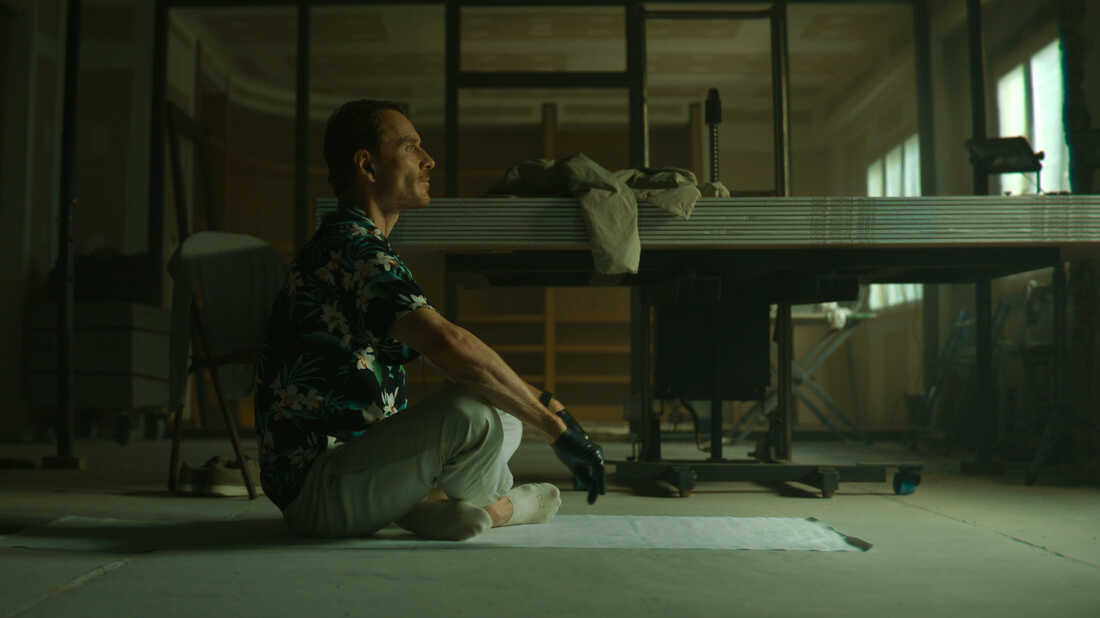
Now we get The Killer, which if you were to get a group of parody writers in a room and ask them to predict what Fincher would do next, it would look something like this. Once again, Fincher takes material that is not, maybe, going to appear on next year’s Nobel Prize for Literature shortlist, (a generally derided graphic novel), and attempts to spin it into Hollywood thrills. The plot has drawn comparison to Soderbergh films such as Haywire, The Limey, and Out of Sight, and if you like those films then you will definitely like this one, unless you feel you want that certain je ne se quois that Soderbergh brings, but I quite liked seeing Fincher’s spin on such a story. It follows a hitman played by Micheal Fassbender, (Hunger, Steve Jobs, Frank), who takes you through his alienated, disaffected process before something goes wrong and you realize that he is maybe not so alone in this world as you might think. He actually has something to lose, something he may have denied himself of belief in during previous times in his life. What follows is a grizzly revenge thriller that I found by turns viscerally exciting, darkly funny, and interesting.
The film has provoked various reactions, Dan Olsen of Folding Ideas said on Twitter cum X, that the film looks like a bunch of film students trying too hard to be like David Fincher. Mark Kermode said he wasn’t sure what attracted Fincher to the material and it came off like a lesser work of Fincher’s. Less official voices, aka all my friends who I respect more than any critic, have variously called the film a hilarious piss take on the hitman genre, a metatextual meditation on Fincher’s career, and a satire of the gig economy, and it is somehow all of these things and other things too as well as just being an excellent pop-corn thriller. In a way this is the most Fincherian film to date because it is somehow many things while still being essentially ephemeral, being essentially a piece of fluff. It doesn’t seem to be trying to be anything and somehow it is finding substance within that purity of genre vision and discipline.
The film largely plays out like an extended punchline on the set up that is the first ten minutes. We meticulously go through his process. The hitman sets himself up as this elegant, lone wolf guy who sits on the edge of society, moving in the shadows, above everyone due to his elite skills at deception, subterfuge, and murder. Then Fincher very pointedly cuts him off mid sentence twice, (hear that, twice), as we watch him fuck up. Also, despite the efficiency with which he mows through various thugs over the course of the movie, the ease with which he is gotten to by his enemies also very much undermines his hyper masculine image. If this film is a satire of anything, it is a satire of the ‘sigma male’ ‘grindset’, and an effective one. That being said, like similar satires of whatever iteration of hyper masculine rebellion was hip at the time like Fight Club and The Social Network, there is also ample room for this to go right over the heads of the people Fincher is directly satirizing. What I mean by ‘the ease with which he is gotten to’, I mean he very obviously has people in his life he actually deeply cares about, and despite all the bravado, all the bluster about how much of an edgy loner he is, he just isn’t one. It’s obviously all a performance, and a fantasy he lives within within his own head. Fincher is fascinated with alienation, not only from society but with your own self. Like Fincher’s iteration of Mark Zukerberg in The Social Network, The Killer’s main character is a man much more interested in appearing above his own emotions than feeling the ones that are obviously there, and his rage as he plows through thug after thug in his quest for revenge is as much an expression of this disconnect in the self than it is an expression of his need to protect his wife. This was a theory that seemed more and more obvious to me as the film went on, and without giving it away, is only confirmed for me by the voice over in the last scene.
People have commented on the structure of the movie, and it is interesting. Historically, Fincher has been very interested in structure and playing with it as seen in films like Gone Girl, Se7en, and most famously Fight Club. This, on the face of it, has a much more straightforward structure, moving through chaptered opponents that Fassbender has to take down one by one, but it does a lot for the film. On one level, people have compared it to a video game structure, taking on levels in a shoot ‘em up plot with gradually more intense opponents intercut with cutscenes, but to me, it much more evokes the episodic nature of fantasy epics. The film I was reminded off most frequently moving through the obstacles to overcome was not, per se, Assassin’s Creed or Doom, but was, in fact, The Princess Bride. Fassbender has a goal, akin to taking the ring to Mordor, and the movie is about the episodic journey he has, encountering various opponents on the way, on the way to the final boss, video game structure again, that could also be seen as a the final confrontation of climbing Mount Doom. In the same way as the ring is destroyed in the volcano where it is forged, so does Fassbender come back to destroy those who made him.
The individual parts are excellent too, there is a fight scene with very large gentlemen that is possibly Fincher’s most intestines tightening fight scene of his career, there is a scene with Tilda Swinton that is arse clenching levels of tense just through conversation and Swinton monologues brilliantly as someone who knows she’s fucked but wants to prolong the inevitable.
I also want to comment briefly on the look of the film. While people have described this as a minor key Fincher, I think it’s great that such a meat and potatoes hitman thriller exists with his visual style. I have seen so many hitman thrillers that are pathetically trying to ape Fincher, whereas this is just Fincher doing what he does. Over the years Fincher has honed and worked and refined a visual aesthetic that maybe more than anyone is of cinema. Maybe not since Dario Argento have we seen a filmmaker more equipped to use the state of technology available to him to meld editing, lighting, and camera movement to do well what it is that cinema is good at and use it for populous thrills. Fincher is also very good at conveying a grimy aesthetic using on the nose contemporary visuals as shorthand for what sort of character he wants to evoke, whether it’s the whiskey tray Tilda Swinton’s character drinks from or the shaved man bun the colossus wears. Not since maybe Fight Club has a Fincher film felt so keyed into the aesthetics of now.
That’s The Killer. It will probably be remembered as a strange curio in Fincher’s back catalog but completionists who seek it out will be greatly pleased to discover a gem in his filmography in the same way as Fulci completionists discovering A Cat In The Brain, Miyazaki completionists discovering Laputa: Castle In The Sky or Hawks completionists discovering To Have and Have Not. It features excellent performances, gripping action, and satirical digs at the ephemeral veneer of ‘cool’. In other words, it’s a great time, and although it may well be a minor entry in Fincher’s catalog, that standard is still incredibly high and it’s great to see he still has his aesthetic on the cutting edge of what is possible with digital filmmaking.
 A Fistful of Film