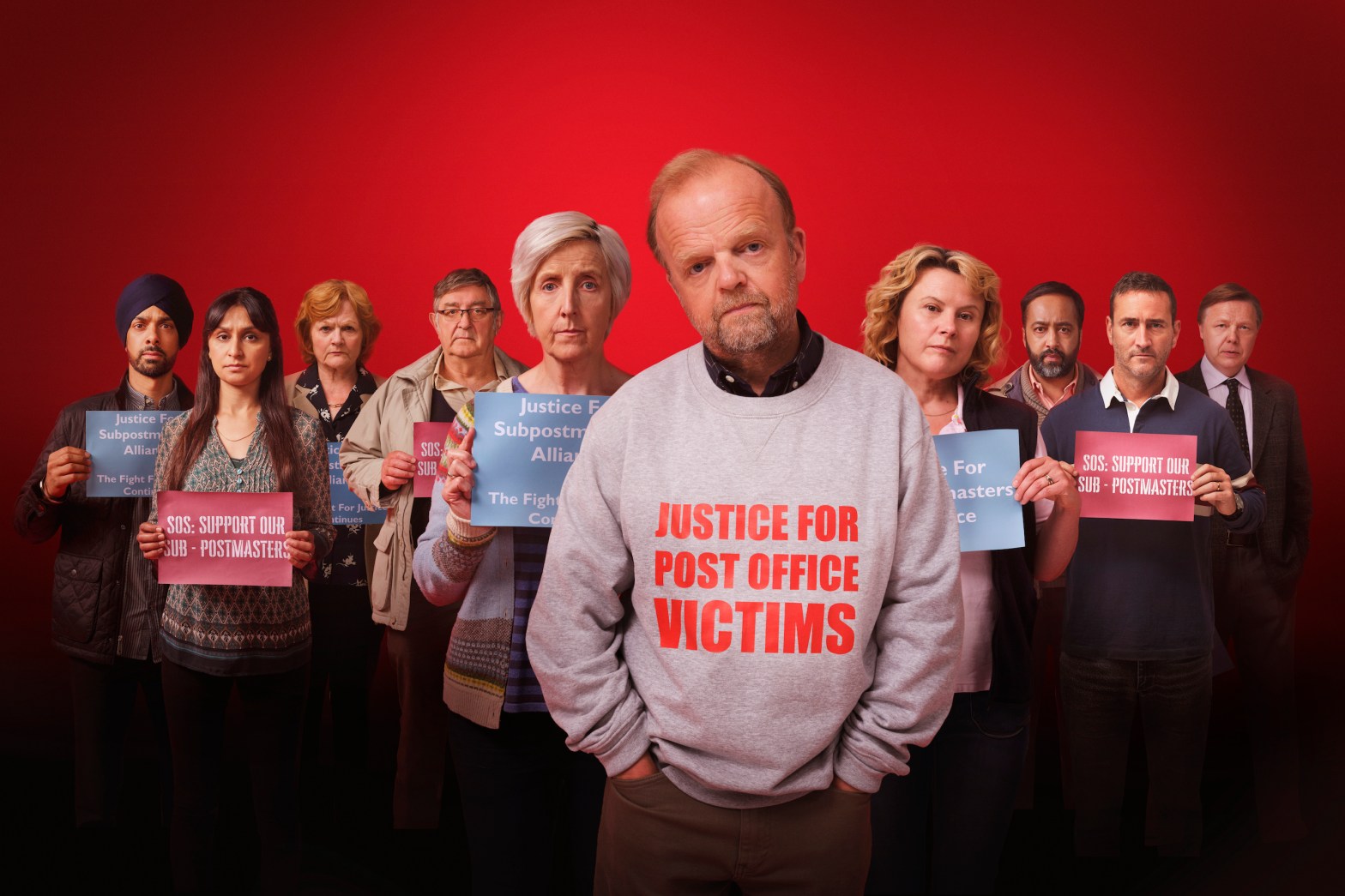
It’s quite incredible when art and media actually has an effect. It’s very easy at the minute to treat art, especially the motion picture arts, as essentially a frivolity. I think, especially in the UK at the moment, people in power do not want to think about movies and television. We live in an age, here in Blighty, where the government attempts to exert an unparalleled level of control over their nationalized media. The BBC in the UK does something that, from what I learn from people I meet from other countries, is unique to it with regard to the level of high quality content it produces. BBC Radio 4 is famous in the UK for producing shows that fill every single microscopic niche of interest you could ever think of. That being said, they find themselves increasingly constricted not just by the Conservative Government but the pressure from the culture wars being waged by the conservative populace. On the face of it, this evokes the historical doublethink of British Conservatives that the arts are both not worth consideration and everyone serious should do STEM instead, but also that art should not be politically challenging and definitely not make anyone politically uncomfortable, it’s too much of a threat.
In comes ITV to this landscape and their new show Mr. Bates Vs The Post Office, which has led to hearings in Parliament. CBEs are getting revoked because of this show. I was particularly curious to see it because I am of the very specific age bracket where I’m very politically involved and interested but also remember absolutely nothing about the real life scandal which this show dramatizes. So it seemed that out of nowhere heads were rolling in the UK and I had no idea why. Articles in the BBC and Sky News seemed to act as if, really, you should know already and it’s weird to want to know more.
Descriptions and accounts of my friends sounded, frankly, unbelievable. There were these people running Post Offices, and a computer system that didn’t work, and people went to prison… it doesn’t really make sense, and that’s the main impression of watching the show. The progression of events is so unbelievable, so intolerable, so confusing that it does play very similarly to Orson Welles’ version of Kafka’s The Trial. The program takes place over many decades and what seems to happen is at the start there is a travesty that is so upsetting that no one wants to face up to it, and the spider web of malice, the butterfly effect of that one horror becomes slowly more and more terrible as time wears on and it seems like lives, decades, relationships just wither and die on the vine.
The promotion around the show, the poster and such, paints it like a sort of Made In Dagenham, Pride, the little plucky little guys come together, type story. Although that story is the main thrust of the plot, it is so much grimmer than any of those films. I had to stop many times to just absorb what I’d watched, to take in the pain and the sadness and, frankly, the horror I was feeling. Over the course of the story you really feel the build up in certain characters of bitterness as months become years become decades of trying without justice. On a personal note I know what it is to be constantly angry, all the damn time, with nowhere to put it and it’s a feeling I would wish on no one. There were moments I saw that feeling perfectly depicted in a character’s facial expression, a line of dialogue, the way someone held their body and I felt a moment of connection so powerful, it brought the story home viscerally.
So, given I was largely unfamiliar with this story and struggled to find information on it at all, I feel at least the premise should be outlined. I know that readers not from the UK will know even less. Mr Bates Vs The Post Office follows an increasingly large and diverse cast of characters trapped in maybe the largest British miscarriage of justice, ignoring war crimes and Irish Famines, of the modern era.
The Post Office is subletting its individual locations to this group of people called the “subpostmasters” who are essentially the milkmen to the milk float, the keepers of the shop. While it is technically their business they are overseen by Post Office Lmt, something that for a public service I think should not exist but that’s beside the point. They have a badly working new computer system. At the time in which the beginnings of the show are set, the Post Office has just transitioned from paper records to computerisation and there are teething problems. The computers are tallying up the financial sums at the end of the day and seeming to get it wrong, and every subpostmaster is told, firstly, you are liable for any losses, and secondly, no one else is having these issues.
Many lose all their savings, including their parents’ savings too. Many end up with criminal convictions, as it turns out the Post Office can functionally operate prosecuting people outside of the police, an insane state of affairs. Some subpostmasters attempt or commit suicide. I am reminded of a line in Anatomy of a Fall where they state in a particular language to commit or succeed in suicide is said the same way. Both the scenes in this show of attempts and success are equally as harrowing and make similar points. What becomes obvious over the course of four episodes is that most, if not all, of these people were completely, 100%, innocent.
The diversity is something to be mentioned actually, there are two Sikh characters played very well as part of the story that very well highlights and reflects the fact that this story affects everyone, and their particular arc in the story is so moving and distressing and sad, and the two actors play it beautifully.
What Mr. Bates Vs The Post Office shows really effectively is complicity. In the wake of the show there has been a lot of bickering about who knew what, but if the events of the program are faithfully adapted then it can only come from people trying to cover up their own mess. One of the most upsetting scenes in the show is of an very ordinary lady who helps at church bake sales trapped in her office terrified that she’s lost money. The amount she owes goes up and up and she calls a helpline that she’s told to call and all she’s told is that she needs to pay that money herself according to her contract, up to some ridiculous number at this stage. People request company auditors to come in many times in the show, offered as a way to help them and all it turns into is a way to control and bully the victims of this crime. You’re watching the trap slowly close in and it’s petrifying watching state machinations from recent history in a country in which I currently live. In a way the inciting incident took place before the show started. It started the minute someone realized within the various machinery involved that something bad was happening and they decided to grin and bear it. From that second on the pact was sealed.
It can’t just be an indictment of the state though, because fundamentally this is also about capital. It’s really about the control of money and private corporations. Once they’re let in Government, they’re wolves in the sheep pen. It is my understanding that this comes down to this concept in Government called PFIs, where you contract out to private companies to do things part of the government’s responsibilities. Americans should be very familiar with this concept because that’s basically the main way the American government does things. They can be a way to raise money for initiatives without the government borrowing or raising taxes but they are incredibly unstable because it introduces a financial, corporate incentive structure into what should be being done for the public good, and really it’s the first stages toward privatization. This is really the corrupting influence here, once a private mega-corporation has the government by the balls, they walk them by it. It also, I think, really exposes the flaws in this structure of contracting out franchise locations so someone running a small high street Post Office is technically running their own business but it can be taken away from them at any time. It’s the trap of the dream of entrepreneurship, it’s the dream of making your way in the world, aspiring to do something yourself, to own something, all the things we celebrate in society, and this structure turns it into a trap, where really you’re just another corporate slave all over again, and people have gone to jail for it in this case. People have died for it.
So obviously the show is very powerful, but it wouldn’t work if it wasn’t fundamentally well made. Obviously it falls into a lot of the pitfalls that are this point less pitfalls than genre markers of ITV television. There are the obligatory contrived lead-ins to ad-breaks and the quick two sentence exposition to set you up for a scene that feels really unnatural but go by so quickly you forget about them in as much time as they take. Really though, you should be watching this show for Toby Jones. There are, occasionally, a couple of starkly televisual performances, which is not a denigration but next to Toby Jones carrying this whole show on his back anyone is going to look like they’re playing for a lesser league. He is supreme and when I’m used to getting him in either feature length or half hour bites in the case of The Detectorists, getting a full four hours of Toby is a joy.
What is worth stating though is that he is part of an ensemble despite playing the titular character. It is the ensemble that grows progressively over the course of the series that steals the show. Small but important performances from Monica Dolan, Ian Hart, Alex Jennings, Will Mellor, and Shaun Dooley I found particularly eye-catching and impressive. For most of these actors this is the highest profile project they’ve starred in. In the case of Mellor this may break him out of the soap opera cult bubble he may have found himself in with Coronation Street.
I love these stories about people who don’t give up in the face of insurmountable systemic odds. Fans of similar Mark Ruffalo projects like Zodiac, Dark Waters, and Spotlight will find much to love in this kind of story, as I always do.
Part of the debate about why this show has become quite such a flame point for this issue is that it took a television show to get people to care. I’ve heard loads of people be sort of perplexed about it, I’ve heard everyone from Oli Dugmore to Alestair Campbell be totally perplexed that this is what it took. Everyone and their dog has brought up the example of Cathy Come Home, Ken Loach’s Play for Today, a series of made for TV movies the BBC produced, that threw a hand grenade into the issue of the housing crisis from the time. I think though, this is the point of art, surely, isn’t it? The point is to get people to think of things they haven’t thought of before, even outside of politics. How many times have we thought about a picture and thought about how it shows us a perspective we’re unfamiliar with. Lady Bird puts me in the view of a suburban teenage girl from Sacramento, something I’m definitely not but it gave me that perspective fully. The works of Sean Baker and Spike Lee, films like Tangerine, Do The Right Thing, Red Rocket, 25th Hour, they put you inside perspectives that are personal, and make you understand the personal, and as history has taught us time and time again, the personal is the political. I heard on one of the latest The Rest is Politics episodes, Alestair Campbell and Rory Stewart talk about how in politics people get bogged down in the weird narratives of politics but what voters remember is that their aunt can’t pay their heating bill. When Liz Truss crashes the economy people lose pensions, lose savings, lose groceries. It is these traumatic memories that form politics and they form the foundation of my politics. This is a subject that Stewart quite starkly refused to grasp in a recent interview with Novara Media so call this personal growth. Mr Bates Vs The Post Office reminded me a lot of latter day Ken Loach, films like The Old Oak and I, Daniel Blake, films where he really starkly represents this concept. Even within the political, I didn’t really know much of the horrors of Scientology until Alex Gibney’s firecracker documentary Going Clear: The Prison of Belief. Similarly Herzog’s Into The Abyss really changed how I thought about the death penalty.
I think, fundamentally art is meant to shake us out of complacency. Maybe it’s not the biggest thing art is there to do but it’s definitely a large part of it. Not long after the climax of this story the Brexit vote took place in the UK. Trump got elected. I feel it maybe fell into the soup of all the horrible, terrible things happening in this world, and people got off scott free with basically manslaughter. So here is a piece of art to shock us out of our complacency, and I think really it’s a great argument for the importance of the arts. Just look at the conversations a fucking Barbie blockbuster has provoked in the last year! Art exists to provoke, it exists to keep us awake! If a single Tory ever again tells you it’s pointless to write, to paint, to act, to make music, tell them you’re going to make a rock opera about all the ways they’ve fucked us over and then do it and let it rack up sales. Mr Bates Vs The Post Office has, more than anything else it has done for me, invigorated my passion for film, for art, for story telling.
It is, to be honest, surreal, to see Mr Bates Vs The Post Office succeed the way it has. The thing to remember from this story is, I think, that it took this. What makes me sad about stories like this when they become movies is how much effort it takes. The storytellers are always able to find one guy with a kind of unbreakable spirit, be it Mr. Bates, Ruffalo’s character in Dark Waters, or the protagonist of Miss Sloane, but those people are few and far between. We can’t all be Meryl Streep in Silkwood, and look what happened to her. It just makes me sad how indomitable we need to be to make those big changes. The game is rigged against us, so, if I can write personally and outside of the critic’s voice for a moment, I would like us all to be a bit more like Mr. Bates, I would like us all to be a bit more like Robert Bilott or Marty Baron. I would like us all to be a bit more like Karen Silkwood. Let them try and take us. To quote The Smashing Pumpkins, the world is a vampire. I don’t want to, I can’t let it suck me dry. I want to stand with my people and make the world a better place. It can’t just be about this one issue. It can’t just be about removing someone’s CBE because they were the face of the issue, because they had a particularly villainous portrayal in the show. It can’t just be that this one issue sucks and we need to fight because there’s been this one TV show. We need to see the themes it is truly about. The show doesn’t exist to tell us this one thing is bad, we already knew that. It exists for us to admire Mr. Bates. It exists to remind us of the Mr. Bates who exists inside each of us, and let us all find him inflamed within us.
 A Fistful of Film