
As the editor of a film review blog and creator of multiple multimedia enterprises, the time I have to watch movies dwindles ever-smaller in the face of a workaday world, and a workaday lifestyle such as mine. And yet I still need my cinema fix! This dilemma leaves me with two options: become Patrick Bateman or find a solution. And while the former might make for a helluva feature, I’ve chosen the latter.
And that solution? Short films!
Exercises of cinematographic brilliance under 30 minutes in length. From the simple to the extravagant, from the surreal to the plain, we’re taking you on tour of some of the many fascinating efforts I’ve come across in my crate-digging travels. This will be a long installment, an informed one, and we’ll try to link publicly films where we find them. There will be no theming to this list, no rankings; it’s all just shorts from here on down.
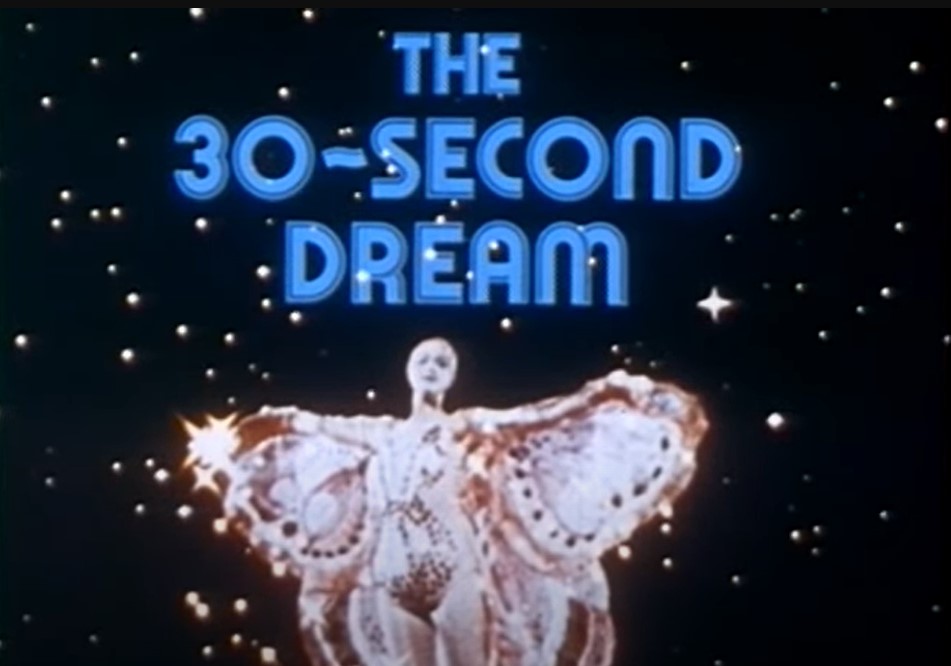
The 30-Second Dream (1978, Lawrence & Brandon)
Let’s set the pace by going right to the bottom of the barrel. Not in terms of quality, but in terms of recognition. We’re talking no poster, no reviews, buried-in-the-sands-of-time-levels of no recognition. During one of my many dredgings of the world’s film archives (in this case, the awesome folks at A/V Geeks), I discovered Michael Lawrence & Terry Brandon’s The 30-Second Dream. It’s an early essay film that cleverly recontextualizes scores of contemporary American commercials as a means of conveying how they manipulate consumers and convince them to to buy, buy, buy. While it often lays the point on a little too thick, there is nothing so otherworldly as the recursive looping of a 40-year-old McDonald’s hotcakes commercial, people running wildly in the streets, capped off by the appropriately commercial voice of narrator Richard Kalter saying the following:
“It’s a new day coming. But in a world that never existed. Peopled by folks who don’t really live there. A six-billion-dollar dream world, created all for you.”
Like the Howitzer to the heart of “dream on” in Jacob’s Ladder, the statement made says it all in one deafeningly brilliant blow. The 30-Second Dream also elicits a strange reaction given the state of the modern world. It’s easy to point to the aggressive commercialization and consumerism and say “look at what it’s come to,” but I find myself so disassociated from this particular period of the 70s that it’s like discovering a time promised, but unexperienced; a world now inaccessible. So many brands highlighted are now footnotes in the modern day, safe for a few enduring giants. What’s more, it manages to undercut itself by leaning so heavily on ironic appeal that (like vaporwave) it laps the earth and comes right back around to just being plain-old appealing, even when you do realize the point being made.
Call it a “1984: Warning or Manual?” moment, but The 30-Second Dream and its approach to appraising the American commercial says so much more than even its own creators likely intended. One man’s product-fueled paradise is another man’s homogenized hell, and another marketer’s wet dream.
The Ossuary (1970, Švankmajer)
A common theme you’ll find in these short subject roundups will be the following: Eastern Europeans are built different. And no one is built quite like the Czechs.
In the year of our Lord 1970, the Czech Republic’s arch-surrealist Jan Švankmajer, renowned for his bizarre and incredible stop-motion creations populating arthouse favorites like 1988’s Alice and 1994’s Faust, found himself in a position where the only thing he needed to construct was the film itself.
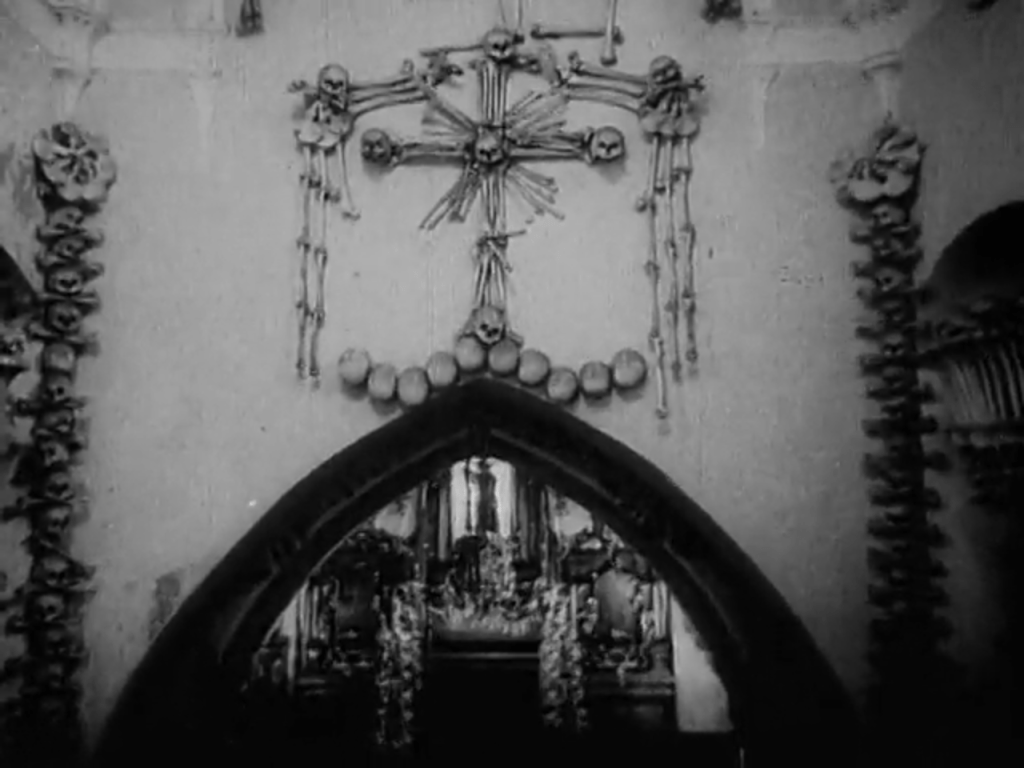
The Ossuary takes viewers inside one of the country’s most visited attractions; the Sedlec Ossuary. Home to tens of thousands of human remains from across the blackest days of European history, the many victims of the plagues and wars that had ravaged the continent, the chapel is host to the unique macabre sculptures made from these literal heaps of bones. After a century-plus of exhuming during a church’s construction, this hallowed space was organized in 1870 by 19th century woodcarver František Rint at the behest of the Schwarzenberg family, a prominent noble house at the time. The documentary was commissioned to commemorate the centennial of the Ossuary, and the man commissioned for the task: Jan Švankmajer.
Through Milada Sádková’s frenetic edits and an amusingly deadpan tour guide (occasionally riled by her unruly school children guests), the Czech mad lad gifts us 10 unforgettable minutes to explore this Baroque World Heritage Site, one still standing and accessible to this day, locked in time by Svatopluk Malý’s morbidly beautiful black-and-white photography. A short so daringly frank in its documenting of the chapel, it somehow managed to get the Communist censors in an uproar, resulting in an inoffensive jazz score to replace the cinéma vérité voiceover. While the historians among you may have the obvious allusion in mind, the Khmer Rouge’s infamous reign of terror in Cambodia wouldn’t start until 1975, so there wasn’t anything to avoid on the global front. All the same, The Ossuary is a treat from one of nation’s finest artists in a rare piece of quality documentary.
The Birth of the Robot (1936, Lye)
Blessed is the executive who handed this man the keys to the oil kingdom. And God is that one of the stranger sentences I’ve had to type for this.
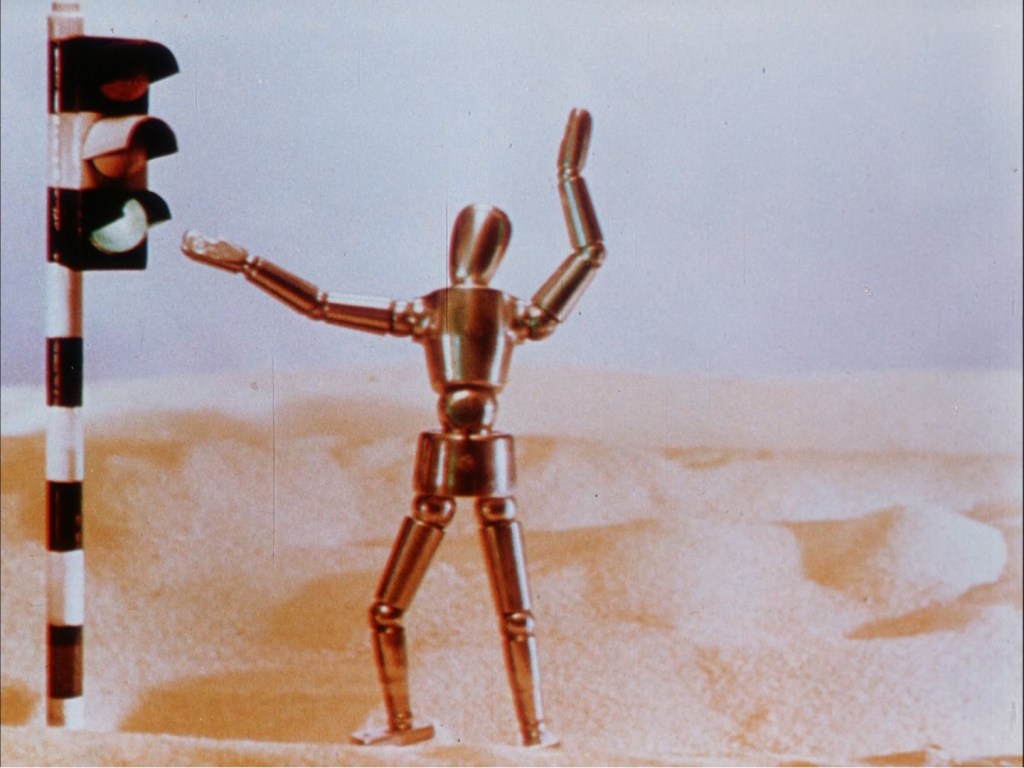
New Zealand filmmaker and kinetic sculptor Len Lye was commissioned by Shell Oil to make a “prestige advertisement” for the company. While arthouse aficionados may recognize Lye for bold experiments such as 1936’s Rainbow Dance and 1958’s Free Radicals, and consumers of “cursed” content may recall a 1933 experiment involving a long-armed, bug-eyed stop-motion monkey singing popular Cuban song “The Peanut Vendor,” what I wasn’t expecting from him was a harrowing story about how time ravages all and one must take care of themselves in order to keep on living. In the case of The Birth of the Robot, it just so happens to involve Shell Oil literally bringing the dead back to life.
Like a bizarro Puppetoon a la George Pal, Lye displays incredible creativity through handsomely crafted models, stylish sets, and an effective remolding of Holst’s The Planets as the driving musical score for this charming and strangely stirring achievement in stop-motion filmmaking. Also of note is an alternate version which features voiceover narration pitched firmly at the industrial film crowd it might otherwise have passed by. A little stuffy and on-the-nose unfortunately, but the primary version does let the animation speak for itself, so it’s a good thing it’s just that: an alternative. One of the most delightful curios from a very special place in science fiction (and real-world) history.
Kustom Kar Kommandos (1965, Anger)
My history with Kenneth Anger isn’t an unusual one.
He was one of the filmmakers introduced to me in film school. 1947’s Fireworks was a decent amateur effort, but like many starry-eyed movie buffs, 1963’s Scorpio Rising put me under its spell from the word go. It was also introduced to me at a particularly impactful point in my development as an artist when mid-century Americana was one of my biggest muses, a period Anger exposes the underbelly of by way of extremist biker culture set to classic, pre-British invasion rock-n-roll. Part of me felt like it was a bit of a hit-piece on gearhead culture full-stop (after all, in a career spent critiquing and eroticizing traditional masculinity, there’s nothing quite like subverting “boys and their toys,”) but after sitting with it awhile, I recognized that Anger’s creative agenda was a bit more pointed than that, and furthermore, executed brilliantly.
Kustom Kar Kommandos was another story.
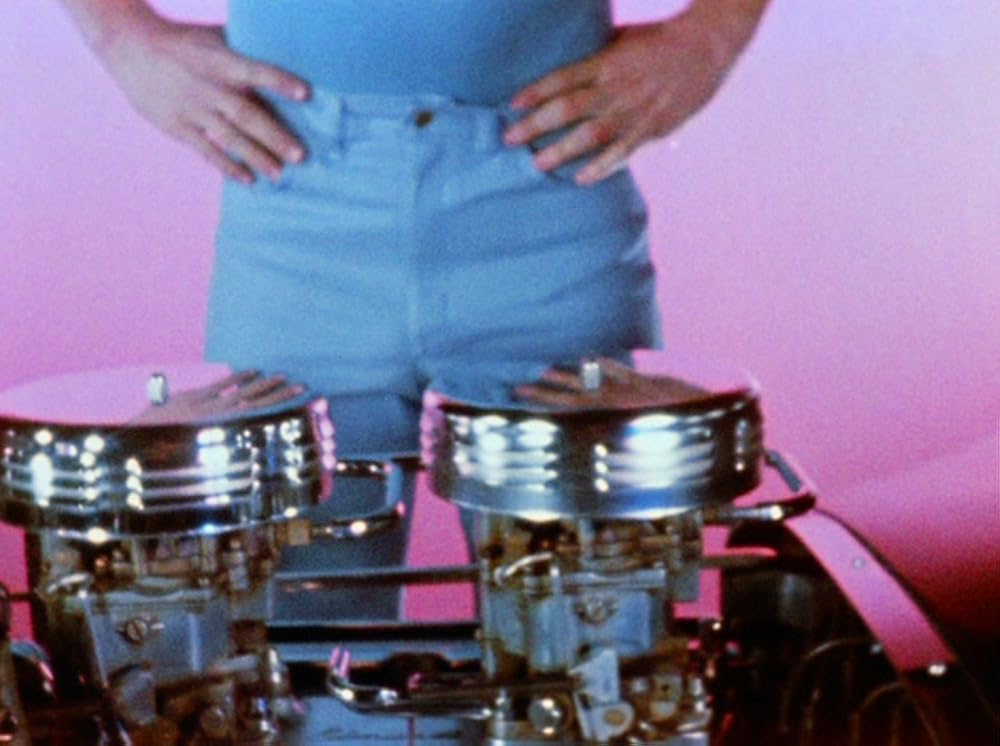
The 1965 short was all that remained of what was to be Anger’s “sequel” to Scorpio Rising. Bankrolled by none other than the Ford Foundation of all people, it intended to examine the fetishistic side of hot-rodding culture. But then the money ran out and all we got were three minutes of…this.
In all sincerity, I dig the vibe. A gorgeous cover of rock standard “Dream Lover,” one cool hot rod, and some ridiculously colorful art direction later, and we are cooking with gas. However, in absence of its bigger picture, it feels like Anger’s comically passive aggressive jab at hot rodding, saying little more than, “You know what’s gay, fellas? Buffing your car!” One does not simply have the acronym “KKK” in a Kenneth Anger film if it doesn’t have some thematic implications. Not after Scorpio Rising.
That being said, there is still some meat on the bones. The implicit (and explicit) eroticism for one, and the fact that (and this is what most people seem to neglect) “Dream Lover” is being sung from a female perspective. If you know anything about dudes and cars, ten-to-one our little deuce coupe is a “she” and therefore the perspective of the song. It lends the film this possible perspective of an object desired savoring the affection lavished upon her by I-Can’t-Believe-It’s-Not Martin Milner. And to that end, bravo, way to turn lemons into lemonade.
While Kenneth Anger remains one of America’s most fascinating and singular forces in experimental film, and I am fully aware of its feature-length intentions, the end result still feels too unfinished and kind of underhanded to gleam anything out of it beyond what’s mentioned here. And yet, it is a testament to Anger as a craftsman that it cannot be written off as a total loss. In lieu of thematic depth, Kustom Kar Kommandos becomes an aesthetically sumptuous gearhead stag reel, and even more of an antecedent to the music video than its 1963 forebear. In fact, I think it’s short enough to slip into a Scopitone machine!
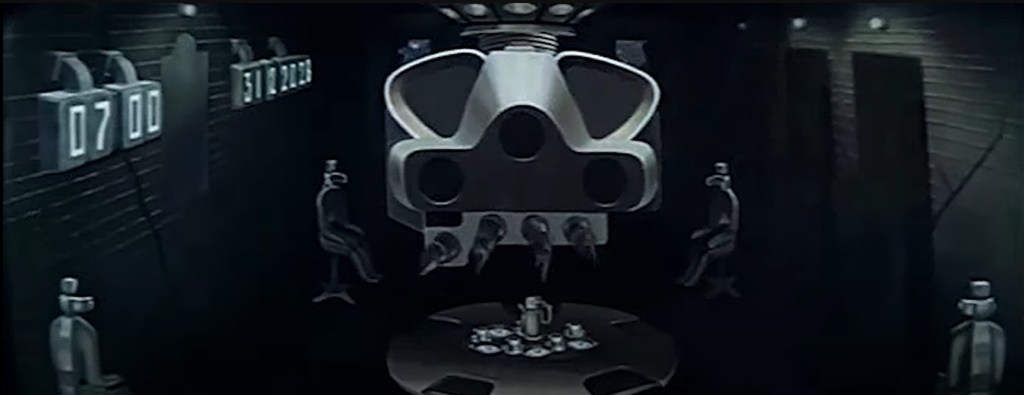
There Will Come Soft Rains (1984, Tulakhodzhayev)
Soviet-era animation has inarguably produced some of the medium’s finest work. This can be assured on the strength of but one name: Yuri Norstein, creator of such classics as 1975’s Hedgehog in the Fog and 1979’s Tale of Tales. However, this Russian maestro is only one of many artists from this unique Iron Curtained period, though his cutout animation techniques certainly made their way across the USSR and its satellite states. While Norstein became an ambassador for a fantasy-style of animation, these techniques have also been put in service to science fiction, such as this co-production with Uzbekistani film studio, Uzbekfilm.
In what can only be described as Ray Bradbury tinged by Harlan Ellison, Nazim Tulyahodzhayev’s There Will Come Soft Rains takes a classic tale from The Martian Chronicles and brings it to a shockingly poignant resolution, perhaps even more so than the original text. Here, the long, literal arm of technology tends to the ashen remnants of its masters as an automated house persists in spite of the nuclear bombing that befell the city of Allendale, California. Instead of happenstance bringing the system to ruin, here it is a single sign of life, a bird, who sends the machine into a frenzy and finally makes it realize it is without purpose in the absence of people. Haunting, startling, and a film that manages to feel whole by the five-minute mark, but drives the point home in devastating fashion by the second half’s end. While originally matted in 1.85, a 2.35 scope version of this short has made its rounds across the World Wide Web, and has yours truly’s seal of approval. Animation like this deserves to be seen in CinemaScope.
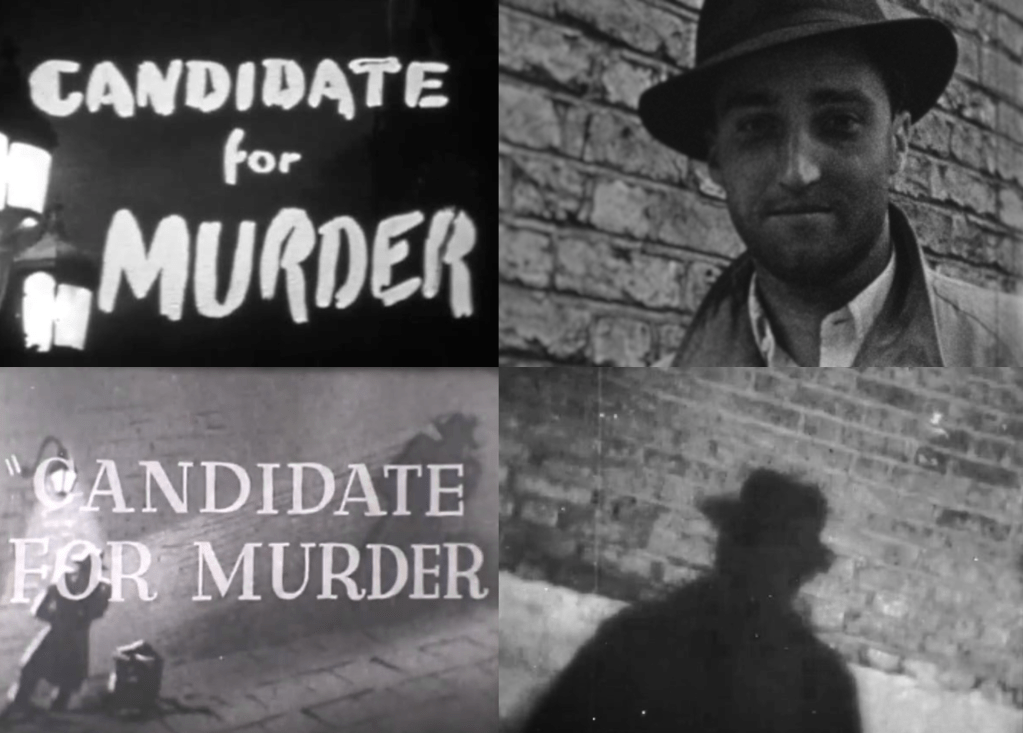
Candidate for Murder (1951, Coleman) & Candidate for Murder (1951, Shenker)
Now here’s something you really don’t see everyday. Sometime around 1951 (no exact date until we can find some back issues), the British fan magazine Amateur Cine World ran a competition where readers were given access to a screenplay by Oswell Blakeston called Candidate for Murder and were asked to produce a short subject based on it. The script itself is a stock piece of hardboiled noir about an is-he-isn’t-he killer as he raps to us about the travails of life on the lamb. And by the grace of God, two submissions exist.
Even with the hurdle of its muffled soundtrack (a 78 RPM record rather than an optical), Don Coleman’s Candidate for Murder is not bad at all. He displays a basic sense of filmic grammar and knowledge of the hardboiled cinema from across both sides of the pond. Naturally it’s rough around the edges, the ruminations of what one goes through after committing murder plays a bit like a working-class Edgar Allan Poe, but it does still needle one a bit but in an outsider art way. I think it’s hearing such an average voice conveying such uncomfortable thoughts that lends the proceeding some verisimilitude. A pretty solid example of a “good for what it is” piece of filmmaking.
Meanwhile, Sidney B. Shenker’s Candidate for Murder takes it all up a notch. While still amateur hour, it’s twice the length of Coleman’s, but proves more compelling thanks to a delightfully unhinged voiceover by Gordon Ball, who relishes the role of a man wrapped up in his head over the latest murder in the headlines. The opening clubbing is also a pretty neat piece of editing, the music dying in a shock the second the victim is brained. Shenker also displays a greater affinity for film noir style with clever camerawork, moodier nighttime photography, and some classic long shadows cast on a wall. Both are fine displays of film fans taking their love of the medium to the next level. Curios for sure, but worthwhile ones at that.
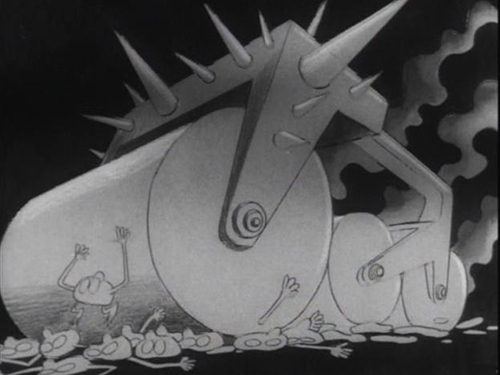
Genesis (1968, Tezuka)
Osamu Tezuka was at once a genius and a Japanese genius. That is to say that the Godfather of Manga’s legacy has stood the test of time in the hearts and minds of millions thanks to such beloved creations as Astro Boy, Black Jack, and Kimba the White Lion. But at the same time, he was a Japanese artist, and that meant a proclivity for producing the strangest shit imaginable. From the infamous Animerama trilogy to bizarre cult favorite Bagi, The Monster of Mighty Nature, Tezuka would freely go where no sane Western artist dared, and almost always came out with something unforgettable. One such example is Genesis, single-handedly one of the most hysterical shorts I’ve ever seen.
Genesis was made on a complete lark. It’s a satirical take on the oldest story on the books, the Birth of Man, and a meta-satire of the grandiose biblical epics made in Hollywood made during the 50s & 60s. In particular, the then-recent 1966 epic The Bible: In the Beginning… directed by John Huston, who receives a “directing” credit. The whole affair of humanity’s creation is flipped on its head aesthetically and conceptually via bizarrely-rendered animals and people, and the slight detail of God making Eve first instead of Adam. Retrospective reviews seem to take umbrage with how much of the comedy comes at the expense of women, but it’s made crystal-clear that the whole of humankind is up for grabs in Tezuka’s brutal satire, for regardless of who came first, the story carries on the same: God wiping the slate clean with a flood. And besides, such comedy is secondary to the overall conceit of a low-budget anime roasting the living hell out of multi-million dollar Hollywood epics.
Regardless of contemporary sensibilities, Genesis is well worth a watch for fans of the Godfather of Manga’s work and those curious about experimental animation from Japan. An irreverent lampooning of an Old Testament favorite with an acid wit and a surrealist’s touch. Bonus points if you spot the blink-and-you’ll-miss it Astro Boy cameo.
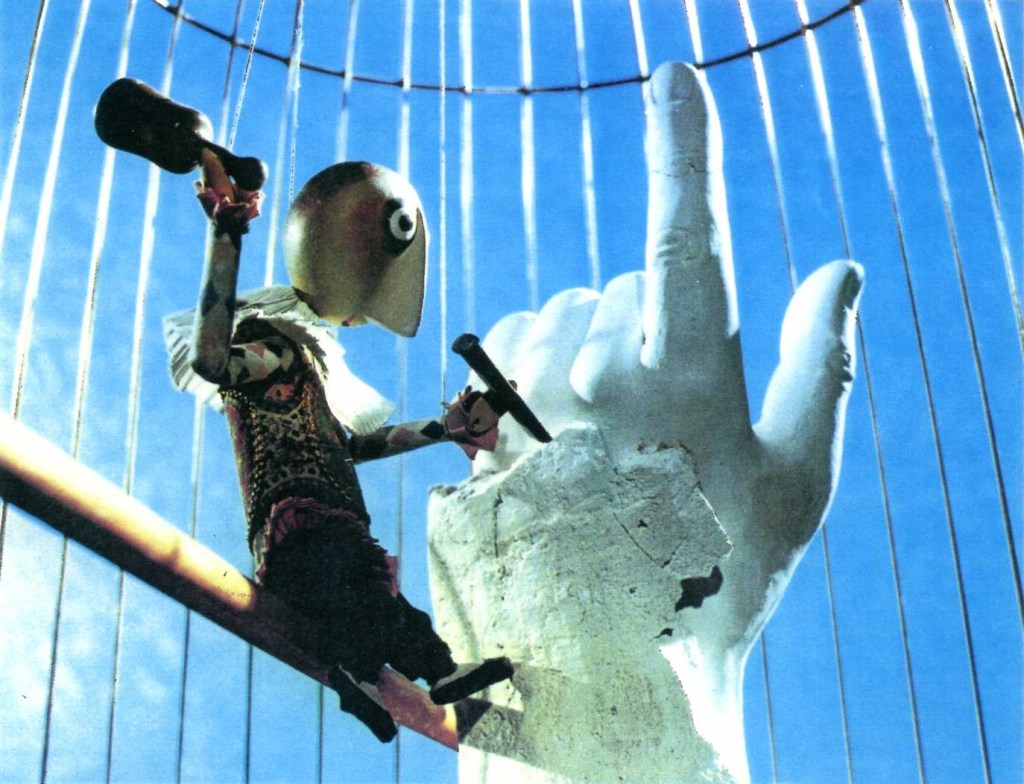
The Hand (1965, Trnka)
Renowned for his rich, classically-inclined fantasy imagery, rendering such timeless tales as Hans Christian Andersen’s The Nightingale and Shakespeare’s A Midsummer Night’s Dream in splendid stop-motion animation, the “Walt Disney of Eastern Europe” Jiří Trnka had clearly sensed the way the wind blew under communist control. Promptly, the Czech maestro kicked in the door to the 1960s with a series of shorts reflecting on the advance of technology and man’s growing obsession with machines, relayed in such films as 1962’s The Passion and 1963’s Cybernetic Grandma. His coup de grâce in his interrogation of the modern world would become one of his most famous and beloved films: The Hand.
In a career colored by fanciful fairytale worlds and charming characters, Trnka wields that preconception to his advantage in a complete table-turner and coda to an esteemed career. The Hand is a film that has stayed with me since I first saw it ages ago, but holds an even greater weight now as an artist cementing his voice. The story concerns a potter forced to deal with a towering hand imposing his will on the craftsman. Trnka crafts a robust rebuke of authoritarian control over the arts, one that spat in the face of the communist regimes of the Eastern Bloc, but also in the face of all who wish to control the artist’s voice for their own ends.
Done with charm, wit, and frightening suspense, Trnka manages to say it all without saying a word, showing the many manners of persuasion those in power can try to use, from insidious seduction to outright force. He ensures that his baroque character designs are at odds with this surrealist hellscape, from Václav Trojan’s increasingly tense score to the unsettling creaks and groans from beyond the walls. The seeming eternal presence of the eponymous hand stalks, captures, and puppeteers the potter to craft for its own glory, the artist now without the freedom he so desperately craved. Poignant, striking, prescient, and above all else, recommended. An iron-fisted allegory with charm to spare, The Hand remains one of the crown jewels of Trnka’s illustrious career.
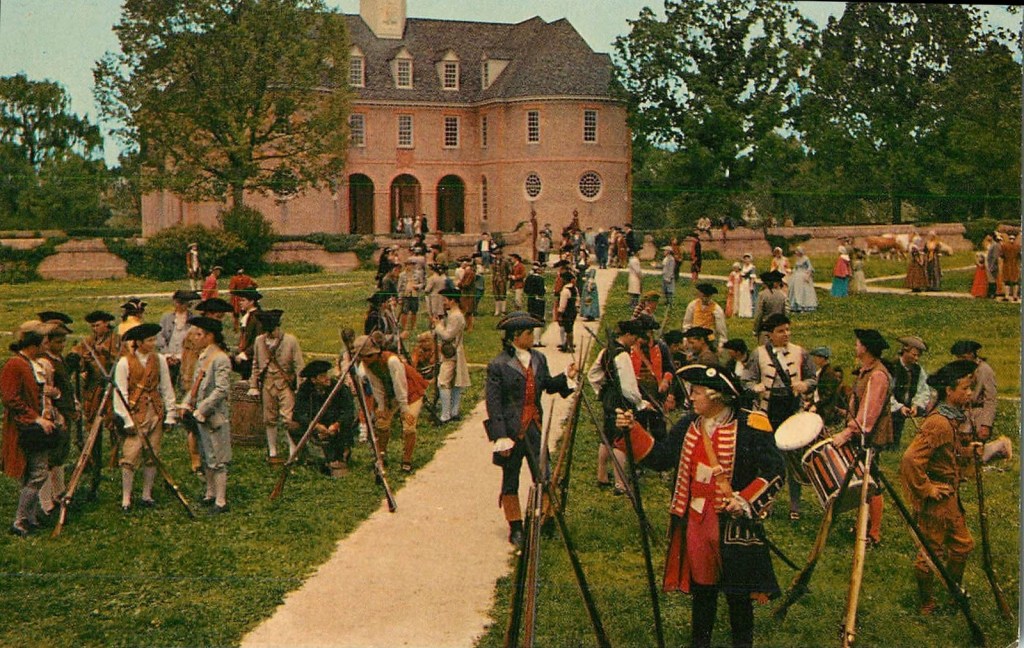
Williamsburg: The Story of a Patriot (1957, Seaton)
What do you do when you fully restore part of a city to its historical glory? Well, one would think a few Kodak memories were in order, but for Paramount Pictures and the Colonial Williamsburg Foundation, they had something bigger planned, one that would see the living history museum immortalized on breathtaking VistaVision film and in glorious Technicolor.
Though its composed stateliness borders on narcoleptic at times, Williamsburg: The Story of a Patriot is a dazzling little featurette shot in the freshly-restored Virginian colony town, spinning the yarn of one fictitious John Fry (played by TV’s own Jack Lord) as he bears witness to history in motion. The prelude to America’s independence plays out over the course of the film’s runtime, and the people of Williamsburg find themselves becoming a piece in the great puzzle of a nation’s choice to be free.
Made as an orientation film, and still screened to this day in a jaw-dropping 67-year run (hence the title of “longest running film”), it stands as a beautifully costumed, handsomely photographed, performed with stoic grace by the cast under the direction of the prolific George Seaton (Miracle on 34th Street, Airport) and scored with Americana aplomb by the legendary Bernard Herrmann. The story of Fry’s transformation from loyalist to rebel is played out with a relatively even hand, and his crossing paths with such famous figures as Patrick Henry, Thomas Jefferson, and George Washington helps weave this guiding figure into the narrative of American independence in an appropriately informative yet engaging way. For enjoyers of revolutionary-era history and superbly produced costume pictures.
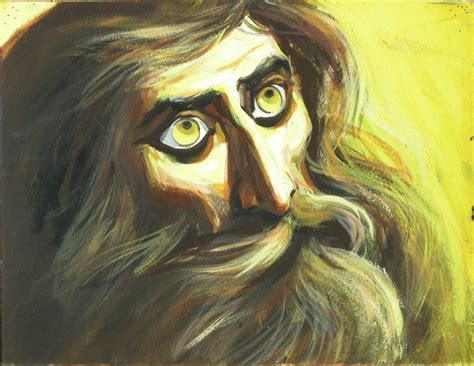
Icarus Montgolfier Wright (1962, Evans)
“My name is Icarus Montgolfier Wright…Born nine-hundred years before Christ. Grammar School: Paris, 1783. High School: Kitty Hawk, 1903. Graduation from Earth-to-Moon, this day God-willing: August 22nd, 1970. Death and burial, with luck, on Mars: Summer 1999.”
Let us round out this list by going straight to the top. Whenever I am asked what some of my favorite short films are, there at that Everestian peak (or sharing the slot at bare minimum) will be Icarus Montgolfier Wright. A 1962 adaptation of a Ray Bradbury short story by the author and fellow fantasist George Clayton Johnson, the soaring optimist spirit of which carries with it a righteousness and purity that could only have come from the pen of Mr. Bradbury.
Relayed via gripping narration from James Whitmore and the stark illustrations of Joe Mugnaini, whose compelling figures and incredible lighting endures in spite of its sepia-toned print, Osmond Evans assembles a tale of man’s eternal quest for flight, from the wings of Icarus to the rockets that would carry us to the moon. The pilot, his earthly moniker seemingly inadequate, searches for something that can convey the sheer magnitude of this achievement, and thusly, calls on a triumvirate from across the ages, and rightly assembles them into man’s first true taste of the final frontier. Poetry in painterly motion.
While some may balk at the fact that it’s less a work of animation, and more akin to an animatic, the profound strength of the source material gives Mugnaini’s work credibility in the same way Mugnaini’s work brilliantly illustrates Bradbury’s prose. Besides, in a world where Chris Marker’s La Jetée can be as influential as it has been, in both science fiction and experimental cinema, there is more than enough room for a film with this much power, where pictures need not move themselves for the film to truly race with life. Recommended without reservation.
In the words of Harlan Ellison, “it’s good for your soul, don’t argue with me.”
Conclusion
If nothing else, I hope this little exercise proves one thing: that the short film is not a medium to be trifled with. When done right, the short is a powerful, exciting format for creators and cinephiles alike, where anything can happen, and where one can stretch themselves aesthetically and conceptually to their absolute limits.
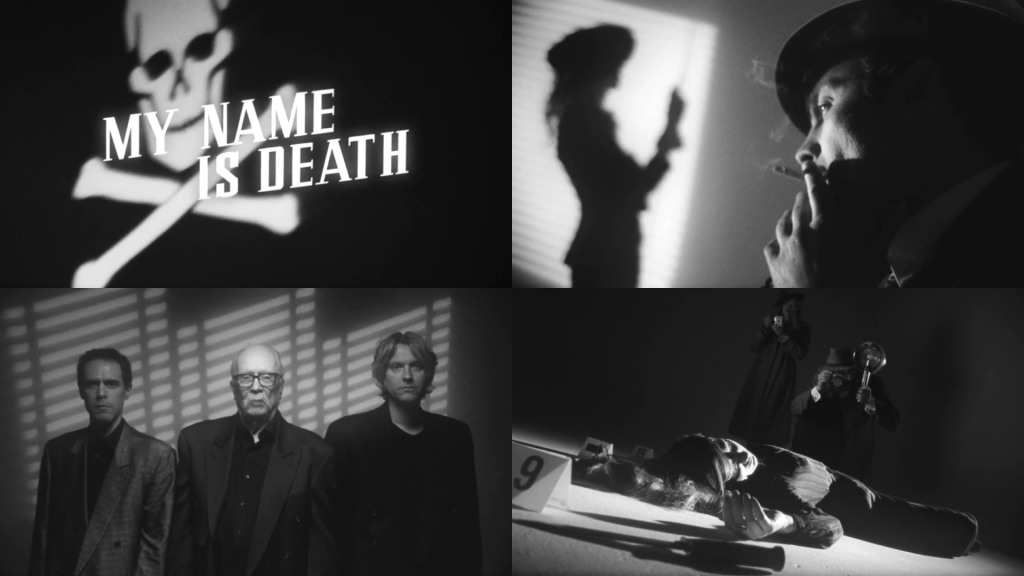
Fortunately, there are still many who manage to wield this format’s power to great effect today. As a final recommendation, go check out Ambar Navarro’s breathtaking slice of film noir, My Name is Death, the appropriately cinematic music video for latest slice of synth dynamite from the man, the myth, the legend: John Carpenter. An electrifying blend of pastiche and emulation set to music by one of the medium’s greatest creatives. See you in the next set!
 A Fistful of Film