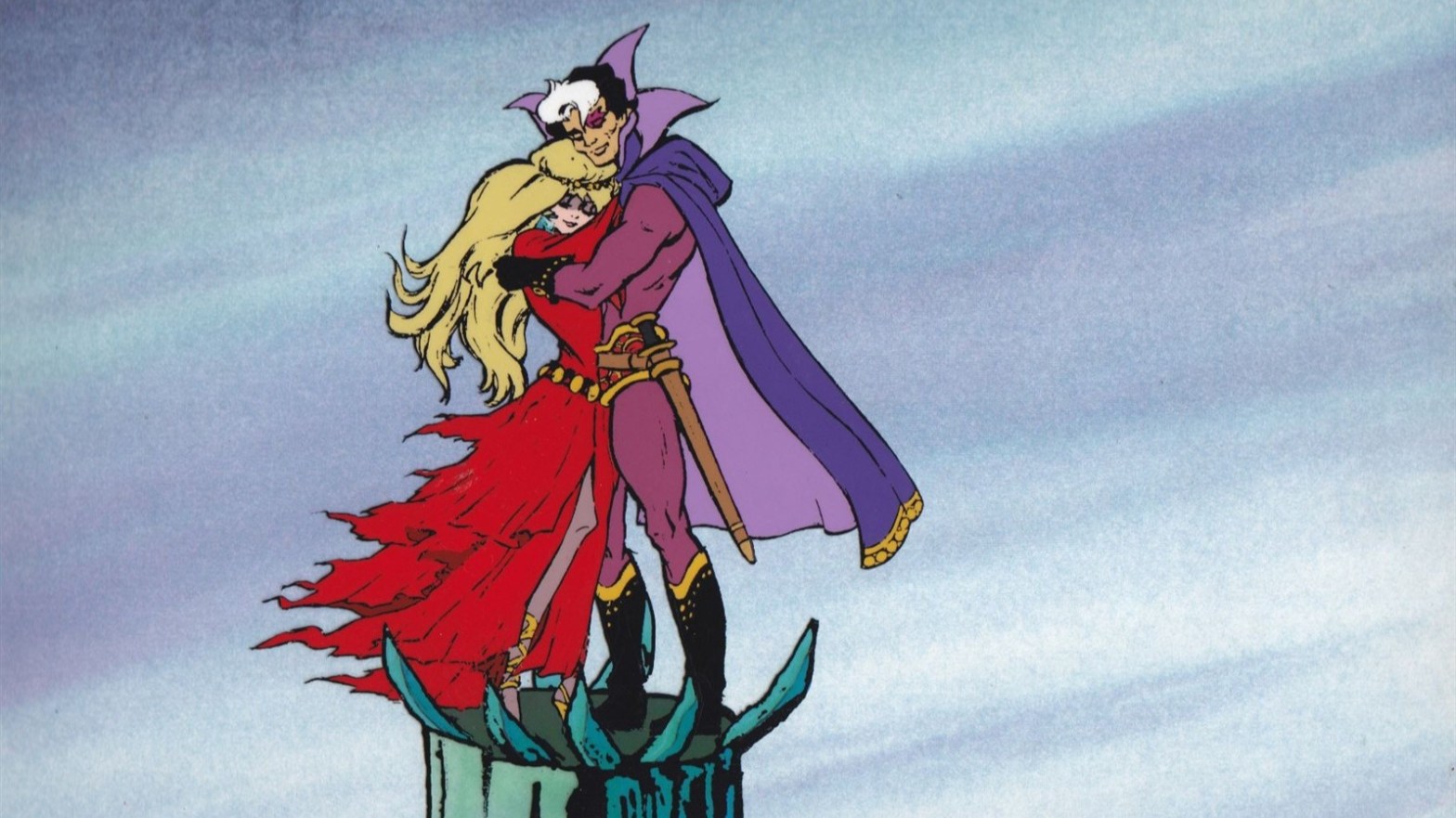
The name Hanna-Barbera is synonymous with a multi-generational legacy of cartoon delights. It began as a tag-team partnership in MGM’s animation division, consummated by the roaring success of Tom & Jerry, and ended in H-B’s acquisition by Ted Turner and merging into Warner Bros., where the many characters created by animation titans William Hanna and Joseph Barbera have endured through a variety of excellent and not-so-excellent revivals, reboots, and crossovers.
Tucked away in the back vaults (seemingly forever thanks to licensing issues), is one of the company’s most daring productions, almost undone by their own reputation and their general decline in the 1980s. From Bill, Joe, and animation veteran Robert Taylor, comes Rock Odyssey.
Here’s a film you can break down into parts: 50% surrealist exploration of America in the mid-20th century, a 25% step towards taking its metaphorical drama seriously, and 25% not knowing what the hell to do with itself, and which is where the film unfortunately ends.
Originally directed by Taylor for Hanna-Barbera, the project dated back to the early 80s and was meant to be a retrospective of American music up to that point. The frame narrative concerned “Laura,” an avatar for all romantics seeking true love, and the many men she loves and loses in that pursuit, all set to American popular music from the 50s through to the late 70s. However, networks and moneymen got to their jabber-jawing, and the project stalled out. Fortunately, even with the death of H-B’s feature film division (of which this was a part), it was resurrected later in the decade with a second frame device of talking jukebox Scatman Crothers (with additional dub work by Frank Welker), setting the table with generalities about each decade. It isn’t a work of hard-hitting music journalism, and while open in its pastiche of the various eras of modern, trend-setting music, it also didn’t pull punches on some of its darker passages. While not as gut-wrenching as its contemporary American Pop (trying to outdo Ralph Bakshi for street-level impact was never in the cards), Taylor adopts a uniquely lyrical, longform music video approach, eschewing dialogue in favor of letting the music and animation say it all. If you’re expecting things to be straight-forward, forget it. If you’re willing to give yourself over to a shockingly sumptuous, kaleidoscopic animated fantasia, best to do so with some serious reservations.
Like many films I enjoy, it’s best to watch intuitively. You can’t sit there begging for explanations, you just have to let the ornate animation and hit-or-miss soundalike covers wash over you, and for the first half of the film, you’re in for a treat. From the classic rock-n-roll of the 50s to the shockingly honest portrait of PTSD in a 60s Vietnam veteran, Taylor delivers some astounding passages that, when they aren’t overwhelming you, entertain and even move. The 70s starts out alright, though the talking jukebox sets the table in a peculiar way, describing the decade as being all about environmentalism and women’s lib and only getting halfway there. However, it becomes clear that the program broke up this final stretch to allow the 80s to be included.
The fourth segment directly continues Laura’s adventure before ending in a fantasy flourish, all set largely to late 70s pop hits, and teed off with a horrendous version of Bee Gees classic “Stayin’ Alive.” If the two halves were allowed to play as one uninterrupted whole, this would’ve been a fine third act, if still muddled as much of the special is. While it is beyond commendable that the story is told through music and image alone, the sensory overload that occurs in certain passages becomes overwhelming and delirious, making character motivations and events hard to keep track of.
And then, smack in the middle this 80s segment, Hanna-Barbera goes full Hanna-Barbera.
When Laura hits her head during her “working girl” yuppie phase, cut to an atrocious AMV featuring classic H-B character dancing their corny 60s sitcom dances (with layouts you can see recycled from shot to shot) set to a diabetes-inducing cover of the diabetes-inducing Wham hit “Wake Me Up Before You Go-Go” which shatters the tone irreparably. I was actually expecting the film to end shortly after this, because it feels like something this studio would do if they had run out of material.
While reportedly done to “lighten the mood” and peer deeper into the 80s in terms of music, there is a deeply cynical part of me that believes this is H-B just not being able to help themselves, going out of their way to pick the most kid-friendly pop song to go with the most kid-friendly characters in a decidedly mature production. Perhaps this is a testament to just how bad interference from the networks and execs had gotten, but we’re also talking about the company that insisted upon the inclusion of cuddly comic relief dog Bandit into the comic book action of Doug Wildey’s Jonny Quest at time when they were on top, with cartoons running on every network. It surely isn’t beyond the pale that Bill and Joe chose to do it this way because of their own innate kid-coddling ways, and it almost sinks the entire show.
That being said, Rock Odyssey is well-worth a look on balance, and its best passages are what should’ve been crown jewels in that golden age of cult animation while the Disney machine was down and the artists were out to play. Unfortunately, even though Bill and Joe stuck to their guns on the tougher subject matter, it’s clear that it became a victim of moneymen, as many would-be classics are, and is seemingly doomed to the same fate that almost befell Heavy Metal thanks to its music licensing issues. You can find a link to the most complete version in the description of the awesome RebelTaxi video that introduced me to this oddity.
 A Fistful of Film